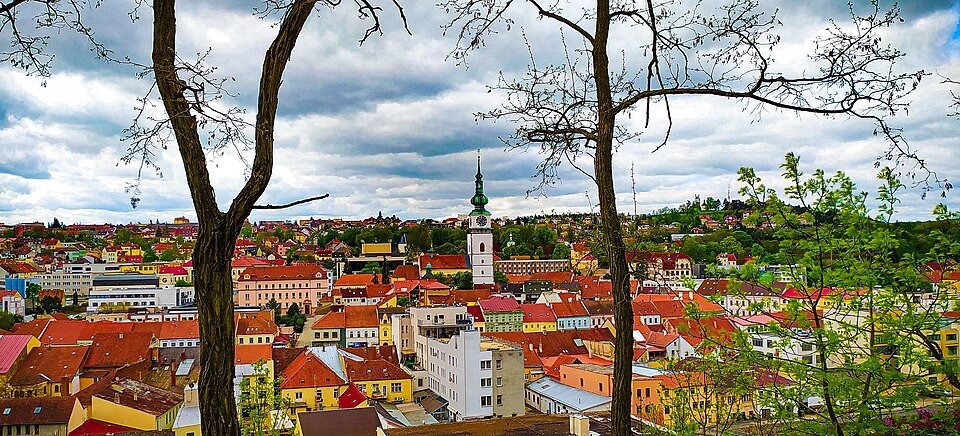
A Jewish quarter, a basilica and streets that ask you to look closer.
Třebíč offers history at the scale of lanes, courtyards and individual lives. Explore the Jewish quarter thoughtfully, then cross towards the basilica and the wider town. A guided visit helps turn beautiful buildings into a more meaningful story.
The Jihlava river, former monastery and Jewish quarter give Třebíč a history that is best understood through connections between places. Domestic lanes, a synagogue interior, a monumental church and the cemetery speak at different scales. Together they preserve evidence of neighbouring Jewish and Christian communities, making this a destination for attentive walking and interpretation rather than a quick collection of façades.
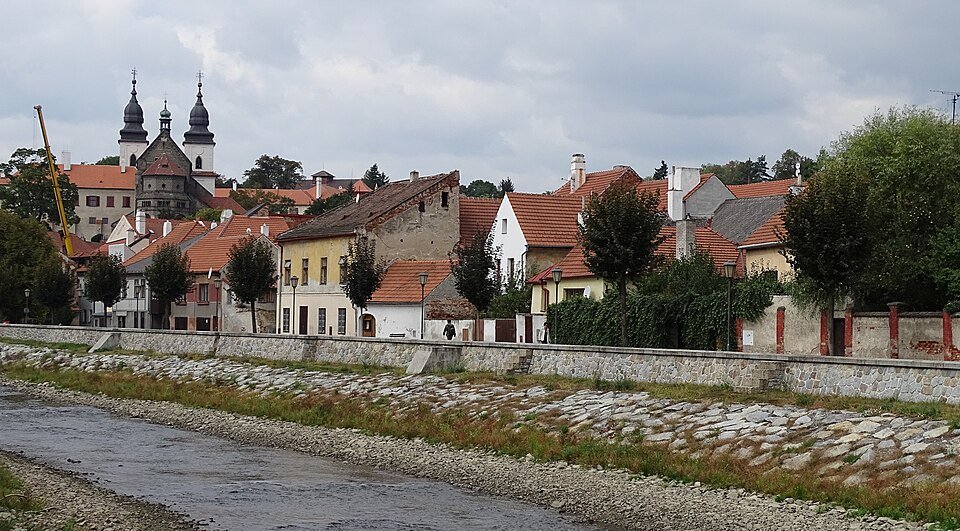
Riverside view of Třebíč’s Zámostí district. Photo: ŠJů · Wikimedia Commons · CC BY 4.0. Cropped for display.
01
The Jewish quarter
The quarter’s close-set houses, passages and small streets preserve the physical pattern of a community beside the Jihlava. Domestic buildings matter here as much as individual monuments: their relationships show how daily life occupied a constrained urban area. The synagogue and nearby interpretation provide names and social history to accompany the lanes. The quarter belongs to the UNESCO-listed ensemble with the cemetery and St Procopius Basilica across the wider historic setting.
Plan your visit Start with the local visitor service for tour options and respectful visiting guidance.
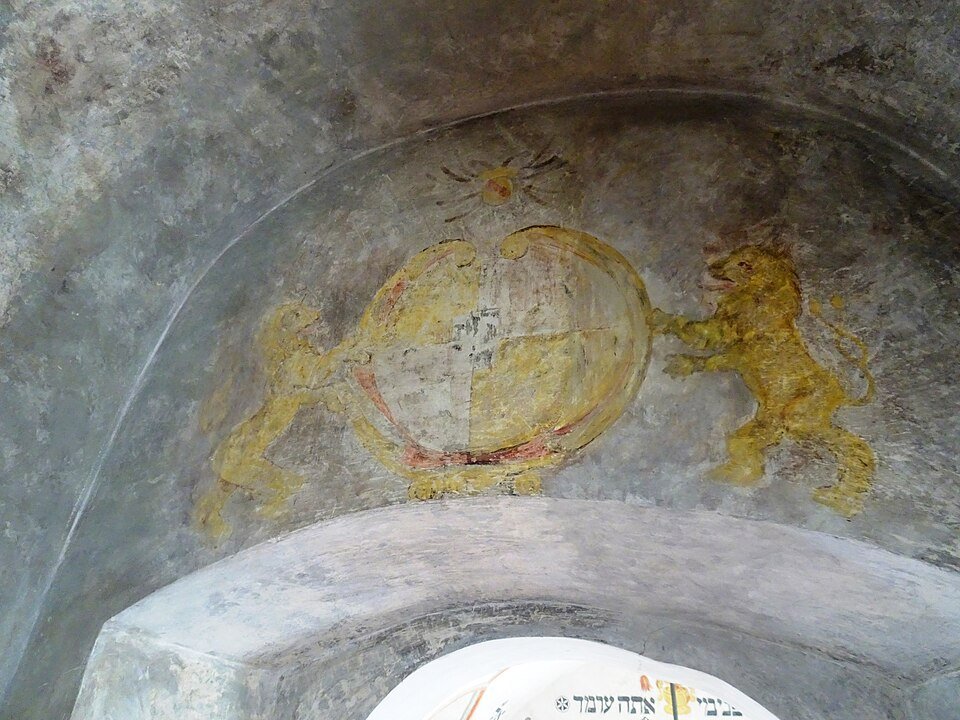
Painted interior detail in Třebíč’s Rear Synagogue. Photo: Palickap · Wikimedia Commons · CC BY-SA 4.0. Cropped for display.
02
Rear Synagogue
Built around 1669, the Rear Synagogue is distinguished by painted decoration from the early eighteenth century. Its restoration returned an interior that had spent later decades as a storehouse to public view. The women’s gallery includes interpretation and a model of the Jewish quarter around 1850. Next door, the House of Seligmann Bauer presents an interwar Jewish household, linking religious life with a shop, kitchen and domestic rooms.
Plan your visit Confirm opening days, tour languages and group reservations.
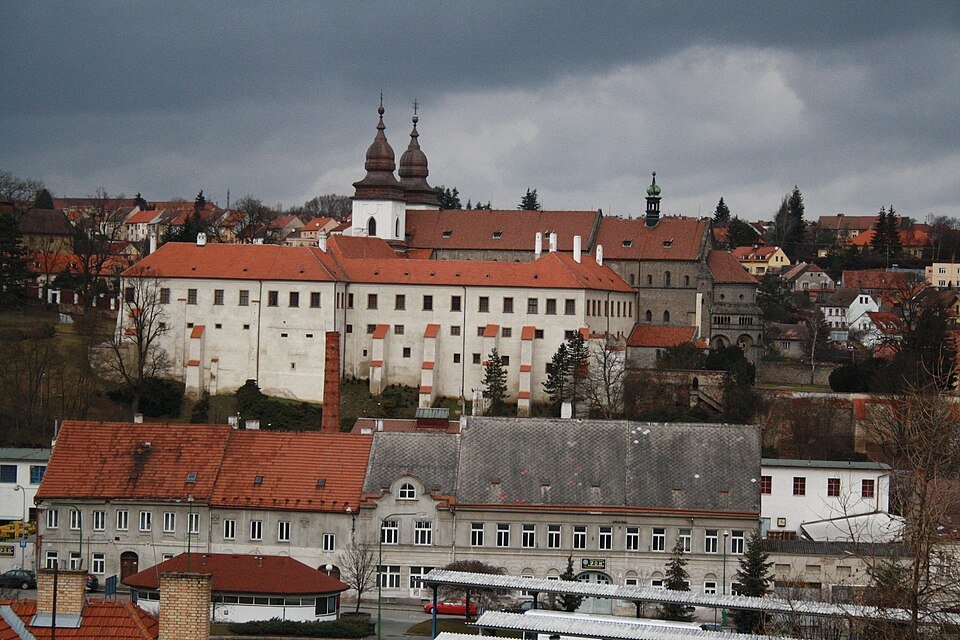
This thirteenth-century monastery church combines Romanesque and Gothic architecture. Its history includes severe damage in 1468, long use for secular purposes and eventual return to worship. Look for the Romanesque rose window, paintings in the abbot’s chapel and the remarkable crypt supported by fifty columns. Those details make the interior far richer than the distant silhouette suggests, and connect the building with the former Benedictine monastery around it.
Plan your visit Check guided-visit arrangements and respect services or temporary restrictions.
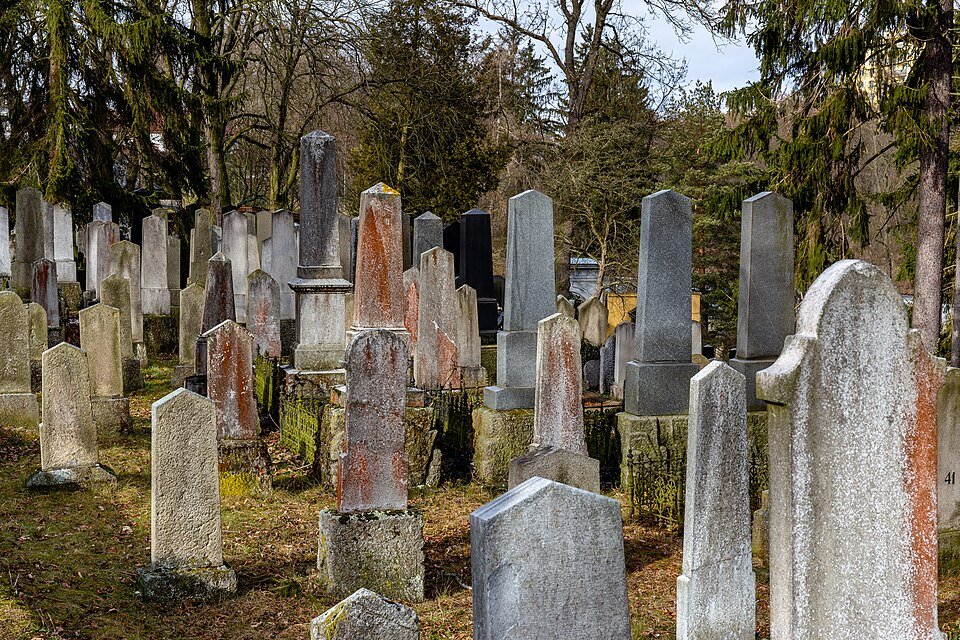
The old cemetery completes the community’s story beyond the inhabited streets and synagogue. Closely spaced gravestones, inscriptions and the changing ground under the trees record individual lives across generations. Its significance lies in that continuity of memory, not simply in its atmospheric appearance. A visit is most meaningful when connected with the quarter below and the history explained there, allowing the names and symbols to sit within a human context.
Plan your visit Ask about access, suitable walking routes and respectful behaviour, including any head-covering requirements.
Choose the visits that matter most to you, then check their official ticket pages for available dates, tour languages and entry arrangements. Keep confirmed visiting times in mind when planning your transport and hotel stay.
Ask your accommodation for its recommended approach and luggage unloading point. The narrow streets of the Jewish quarter need particular care when arriving with a car or coach.
The basilica, synagogue-related visits and cemetery are different parts of the story. Check current opening and guided-tour arrangements with the local visitor service before choosing your route.
Mix a short heritage visit with time beside the river. Hills, steps and uneven paving can affect a route through the historic quarter and towards the cemetery, ask about suitable alternatives.
Approach the Jewish quarter as a lived historic neighbourhood, not just a photograph. A guided introduction can help connect individual buildings with the town’s wider history.
Start at the visitor service and take a guided introduction to the Jewish quarter.
Visit the basilica on an available tour and pause for lunch.
Allow time for the cemetery or a gentle walk through the wider town.
A suggested outline, adjust it to opening days, bookings and your pace.
Enjoy the place, not just the sights
Pause. Taste. Stay a little.
Take a meal break around the centre rather than hurrying through the heritage quarter. Staying overnight leaves time to return to the streets in a quieter mood.
How long to stay
One or two nights work well for the Jewish quarter, basilica and a relaxed town walk.
A useful local contact
Eat & drink.
Check the menu and availability directly, especially for a group.
Elipso Restaurant, Grand Hotel
A central restaurant within the Grand Hotel. Contact hotel reception about dining reservations and the arrangements available for your party.
Suggestions are based on location and the hotels’ published information, not personal inspections. Confirm room types, accessibility, parking and current rates directly.
Compare regional train and bus services, allowing time for the walk or transfer to your hotel. The historic areas include slopes, steps and uneven surfaces, ask for accessible routing if needed.