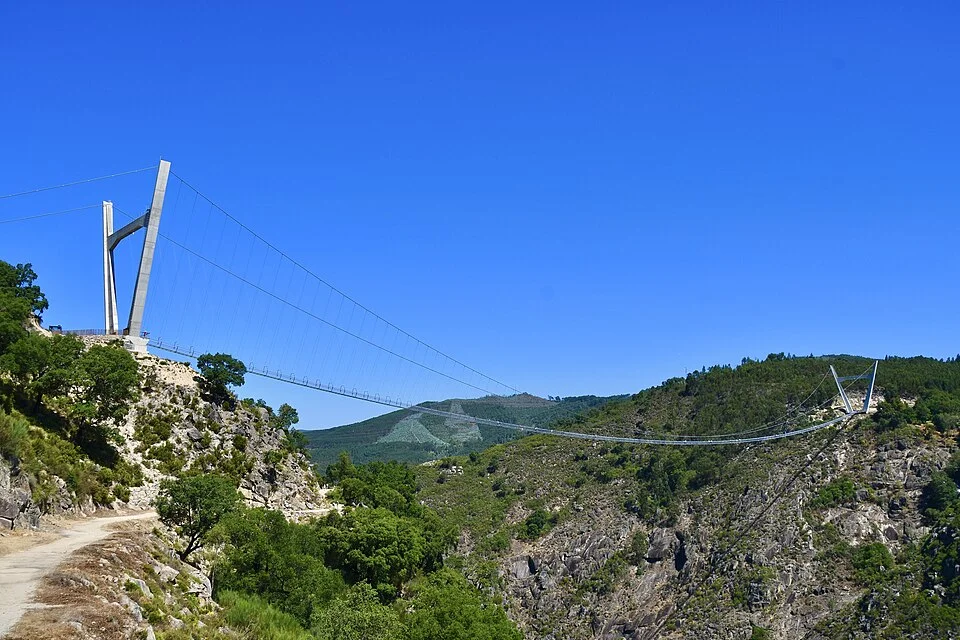
The 516 Arouca suspension bridge stretches 516 metres across the Paiva landscape, about 175 metres above the river. The open setting and the view through the walkway make it a very different experience from an ordinary country stroll. Come for the drama, with a proper plan for the entrance.
The bridge places a slender engineered crossing within the steep Paiva valley, part of Arouca’s UNESCO Global Geopark landscape. From its deck the river, rocky slopes and gorge can be read together. The nearby walkways offer a complementary perspective close to the valley sides, making the surrounding terrain more than the background to a single crossing.
Enlarge photo516 Arouca suspension bridge above the Paiva valley; engineering design by Itecons. Photo: Jérémy Toma · Wikimedia Commons · CC BY-SA 4.0. Cropped for display.
Crossing516 metres long
HeightAbout 175 metres
Minimum age6, with stated adult rules
Enlarge photo516 Arouca suspension bridge above the Paiva valley; engineering design by Itecons. Photo: Jérémy Toma · Wikimedia Commons · CC BY-SA 4.0. Cropped for display.
A modern way to see a dramatic landscape
This pedestrian bridge adds an extraordinary crossing to Arouca’s river-and-mountain country. Its appeal is the relationship between the slender structure and the valley around it. Look beyond the engineering to the Paiva landscape, and allow a full outing rather than treating it as a quick stop in Porto.
The 516-metre span is suspended around 175 metres above the Paiva. Towers and cables hold a narrow open-mesh deck across the valley, exposing the relationship between the structure and the drop beneath it. Its visual lightness contrasts with the scale of the rocky gorge, while the river and waterfall provide natural reference points below.
The Alvarenga side and the Areinho/Canelas approach involve different access arrangements. A Paiva Walkways outing can add substantial walking and stairs, it is not automatically the same visit as the bridge crossing. Book the entrance and experience you actually want, then follow the operator’s directions to that meeting point.
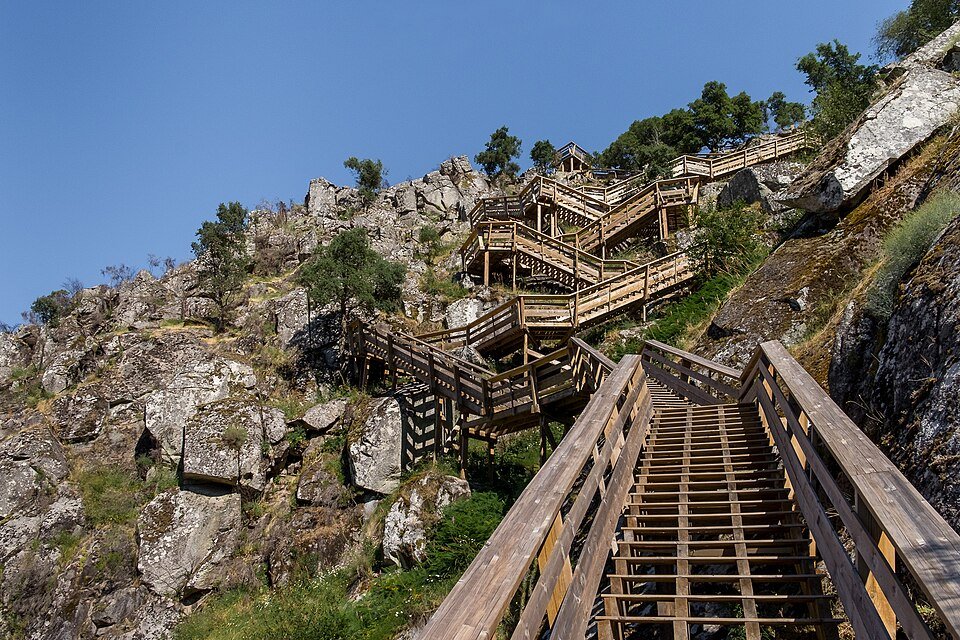
The Paiva Walkways follow the river landscape using timber paths and flights of steps where the slopes demand them. They reveal vegetation, rock faces and changes in river level from much nearer the valley floor than the bridge does. The two experiences therefore offer different readings of the same terrain, rather than interchangeable versions of the crossing.
Make the visit work for you
Tickets, access & reservations
The operator requires advance online booking for a timed, guided visit, tickets are not sold at the bridge entrance. Children must be at least six, and visitors aged six to seventeen must be accompanied by an adult. Read current health, clothing and weather rules. Contact the operator before booking if mobility is limited, ask specifically about adapted access from Alvarenga.
Arrange the journey to Arouca and the entrance shown on your ticket. Parking is followed by an approach on foot, and some routes involve many stairs. Use the official directions for Alvarenga or Areinho/Canelas, not a generic map pin on the middle of the bridge. Check weather-related notices before travelling.