River terraces, azulejos and a bridge worth crossing.
Porto rises in layers above the Douro. Give the riverside its moment, then climb into the streets around São Bento and Clérigos. Across the bridge, Vila Nova de Gaia offers a separate view of the city and its wine heritage.
Porto’s centre descends through tightly packed streets to the Douro, where bridges connect the city with the opposite bank at Vila Nova de Gaia. The riverfront, railway station and Clérigos tower each express a different part of its public life. Serralves adds another chapter outside the oldest streets, combining contemporary culture with a historic villa and designed park.
Suggested stay: 3 nights. Adapt the pace to your interests.
Walk the historic riverside and watch the city rise above you. The upper town involves substantial slopes, combine walking with transport rather than treating the whole centre as flat.
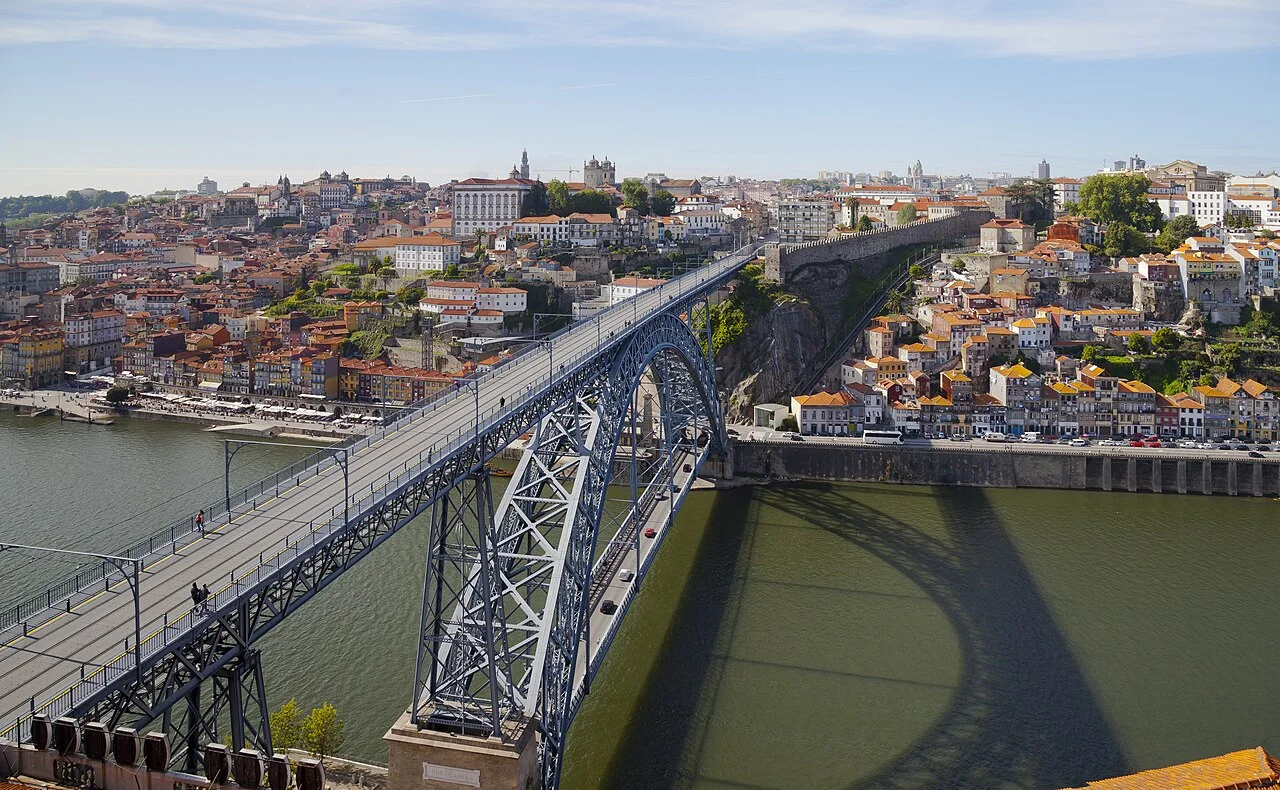
Ribeira’s closely packed façades and quayside reveal the meeting of the old city with the Douro. Looking across the water places the waterfront streets within a larger landscape of bridges and the buildings of Gaia. The Dom Luís I bridge adds an unmistakable iron structure to that view, linking the river’s two urban banks.
Pause over the tiled entrance hall before continuing into the city. It remains a working station, keep passenger routes clear and protect your belongings in crowds.
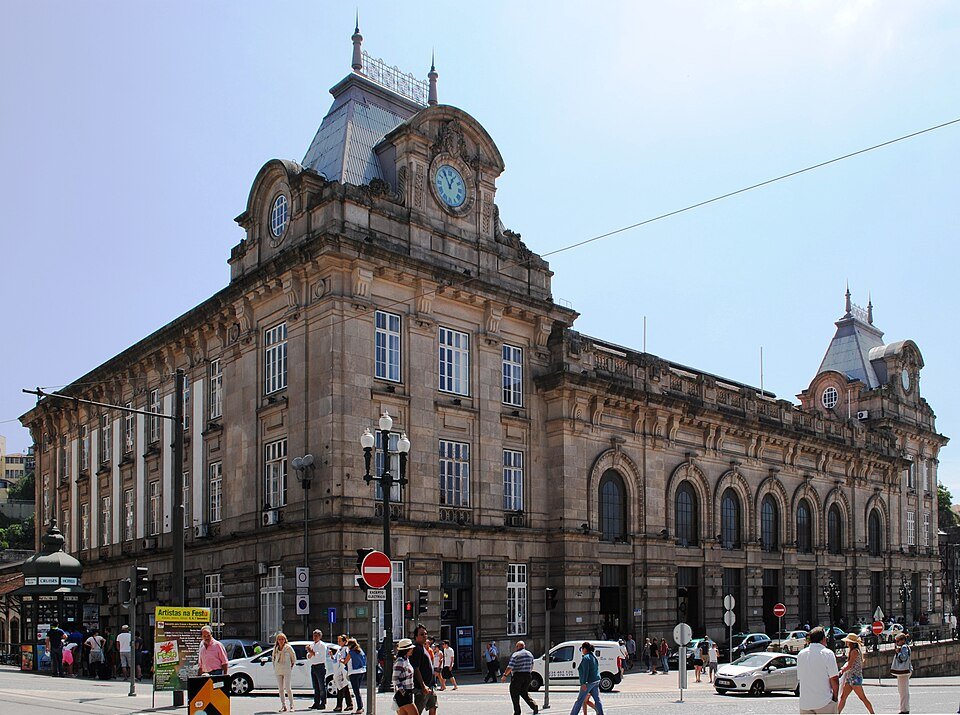
São Bento’s entrance hall carries around 20,000 tiles by Jorge Colaço. Their narrative scenes include Portuguese history and changes in transport, turning the station into a public picture gallery as well as a working railway building. The elaborate exterior and the tiled vestibule belong to the same ambitious civic presentation of arrival in Porto.
The baroque tower is a landmark from below as well as above. The climb involves stairs, check ticket options and conditions before committing to the ascent.
The Baroque church, museum and tower are connected with the Brotherhood of Clerics and the architect Nicolau Nasoni. The tower has marked the skyline since 1763. Seen from the street it is a slender stone landmark; the view from above instead reveals how roofs, church towers and the river organise the city around it.
Enlarge photoWooded avenue in Serralves Park during Serralves em Festa, 2019; park design by Jacques Gréber. Photo: Joseolgon · Wikimedia Commons · CC BY-SA 4.0. Cropped for display.
Serralves
Give the museum, contemporary art and gardens a separate outing from the riverside. Check the programme and which parts are included in the chosen ticket.
Serralves brings together contemporary art, an Art Deco villa and an eighteen-hectare park. The park’s formal gardens and woodland derive from Jacques Gréber’s design of the 1930s, with paths linking different landscape settings. This makes the grounds a significant part of the experience alongside the museum’s changing exhibitions, rather than merely an approach to the galleries.
Reserve a specific cellar visit, Serralves programme or tower entry when timing matters. The 516 Arouca bridge is a separate excursion with timed tickets and a road transfer, not an attraction in Porto’s centre.
With children & at your own pace
Balance indoor sights with gardens or a short riverside outing. Supervise children on busy quays and bridges, and save energy for the climb back.
Access & getting around comfortably
Steep streets and stone paving are common. A river view does not imply a level approach, ask hotels and transport operators about your exact route.
Season & conditions
Allow a wet-weather option in the cooler months. Summer and festival dates can make the riverside busy, reserve the experiences that matter most.
Eat & drink
A LOCAL DINING OPTION
17º Restaurante & Bar
Hotel Dom Henrique’s upper-floor restaurant offers a meal with city views. Book a table and check the current menu directly.
Fewer than 15 rooms? Contact the hotel directly. 15 rooms or more?Ask ATA for low group rates → We use existing agreements where available and negotiate for your group when needed. We respond within 48 hours, allowing for worldwide time zones.
Getting here & local help
Plan the last part too
Porto Airport connects to the city by metro. Check whether your long-distance train uses Campanhã or São Bento and plan the connecting leg. Gaia lies across the Douro, allow for its hills too.
Use the official resource below for local information, current visitor arrangements and tourism contacts. For a specific attraction or booking, contact its operator directly.
Written for ATA, published October 25, 2026. Official resources are linked beside the subjects they support. A live source link is not a guarantee that conditions will remain unchanged.
Porto: The Dom Luís I bridge and Porto’s Douro waterfront. Photo: Diego Delso · Wikimedia Commons · CC BY-SA 3.0. Cropped for display.