River reflections, tiled roofs and a beach beyond the lagoon.
Tavira offers a quieter Algarve rhythm, with a river through the old town and a barrier-island beach beyond it. Enjoy the lanes and churches first, then make the island a properly planned outing with its own boat connection.
Tavira’s compact hilltop, river crossings and tiled roofs form a townscape distinct from the open Atlantic beaches beyond the lagoon. The castle records its fortified past, while the Gilão provides a lower, more spacious route through the centre. Offshore, the barrier islands, saltmarsh and tidal channels of the Ria Formosa explain why reaching the beach is also a journey through a protected coastal landscape.
Suggested stay: 3 nights. Adapt the pace to your interests.
Climb into the historic centre for the castle garden and views over tiled roofs. Watch uneven steps and edges, especially with children.
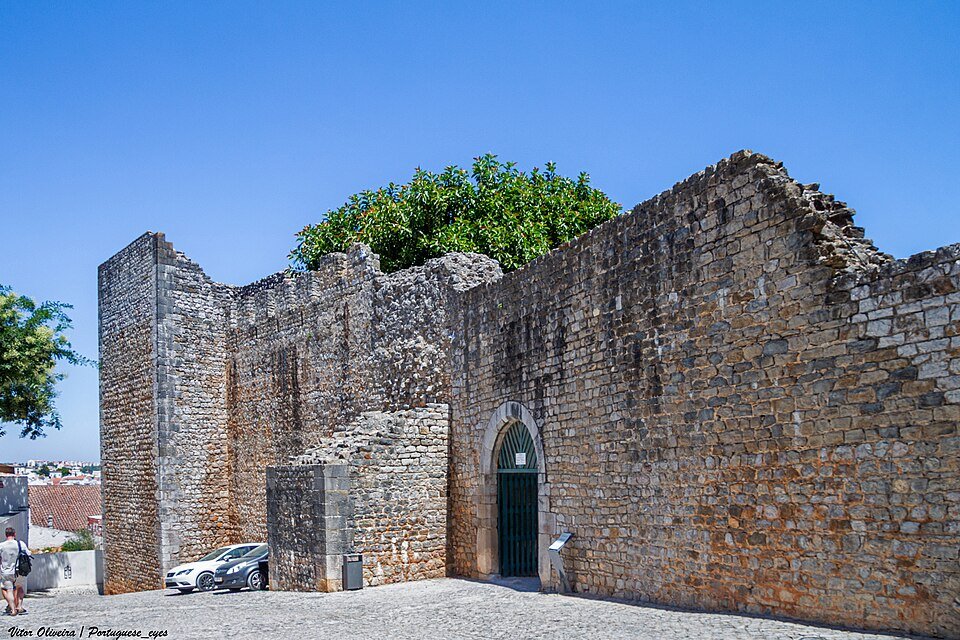
The castle and surviving walls have roots in the Islamic town and were modified during the medieval period. Their position on the Santa Maria hill allowed oversight of the settlement and surrounding approaches. The remaining enclosure frames views over roofs and churches towards the river and coast, placing the fortification within the town it protected.
Follow the riverside and cross between the town’s two halves. Give yourself time for cafés and small detours instead of treating it only as a transfer to the beach.
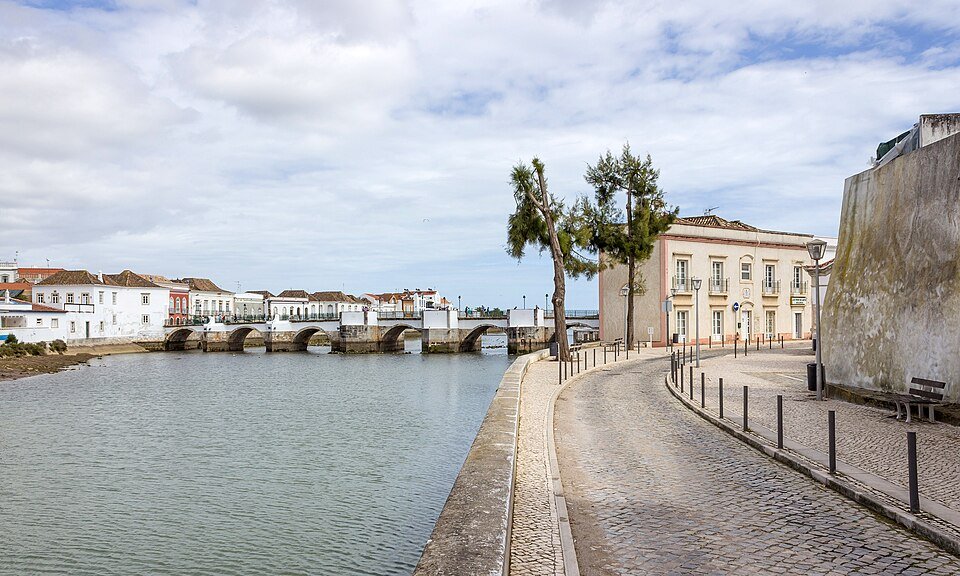
The old pedestrian bridge has seven arches and is documented from the medieval period. Although often called Roman, that name should not be treated as a proven construction date. Major seventeenth-century rebuilding and later repairs shaped the structure visible today. From the banks, its low arching line ties together the two sides of the town.
The island beach lies beyond the lagoon, reached by boat services that vary with season and departure point. Check the final return and bathing conditions.
Tavira Island forms part of the sandy barrier system separating the Atlantic from the Ria Formosa’s sheltered waters. Its beach setting is therefore different from the town’s riverfront: dunes and an open seaward shore lie beyond the lagoon crossing. The contrast between these two sides of the island is central to understanding the local coast.
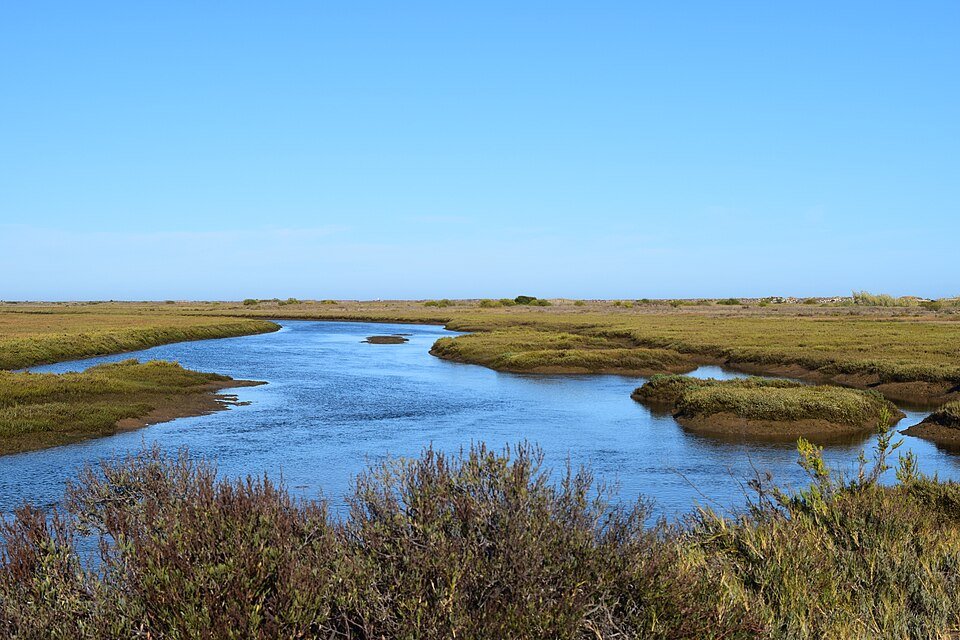
Enlarge photoTidal channel and saltmarsh in the wider Ria Formosa (regional landscape context). Photo: Ricardo Oliveira · Wikimedia Commons · CC BY-SA 3.0. Cropped for display.
Ria Formosa
Explore the lagoon landscape through a suitable marked route or responsible boat outing. Respect protected habitats and never improvise a crossing of tidal channels.
The Ria Formosa combines saltmarsh, tidal mudflats, channels, dunes and barrier islands rather than one continuous lake. These habitats support fish nurseries, shellfish gathering and important bird populations. Around Tavira, saltpans and working waterfronts show the human side of the same productive wetland, connecting its ecological importance with local livelihoods.
Book a particular lagoon outing and fixed-date accommodation ahead. Check seasonal ferry departures, the correct quay and the return service before setting off.
With children & at your own pace
A town-and-beach combination works well if you keep boat times realistic. Bring sun protection and water, supervise by the river and follow lifeguard flags at the beach.
Access & getting around comfortably
Ask the boat operator about boarding and beach access, which can differ from the town’s streets. A central hotel is not automatically step-free.
Season & conditions
Summer brings heat and busier beaches. Outside summer, check boat frequency and which beach services operate, town walks can still be rewarding.
Eat & drink
A LOCAL DINING OPTION
Mouraria, Pousada Convento Tavira
The convent hotel’s restaurant offers an Algarve dining option in the old town. Confirm current service and reserve a table directly.
Fewer than 15 rooms? Contact the hotel directly. 15 rooms or more?Ask ATA for low group rates → We use existing agreements where available and negotiate for your group when needed. We respond within 48 hours, allowing for worldwide time zones.
Getting here & local help
Plan the last part too
Faro is the main regional airport. Check current Algarve railway or coach connections into Tavira, then arrange the final hotel transfer. The town and its island beach are different locations.
Use the official resource below for local information, current visitor arrangements and tourism contacts. For a specific attraction or booking, contact its operator directly.
Written for ATA, published October 25, 2026. Official resources are linked beside the subjects they support. A live source link is not a guarantee that conditions will remain unchanged.
Tavira: Roofs and church towers in Tavira’s old town. Photo: I, Panarria · Wikimedia Commons · CC BY-SA 3.0. Cropped for display.