Hills, tiled streets and a city that rewards wandering.
Lisbon is best enjoyed in chapters. Start beside the Tagus, climb into an older neighbourhood, then give Belém its own outing. Between the monuments, leave time for a pavement café and the changing light on the river.
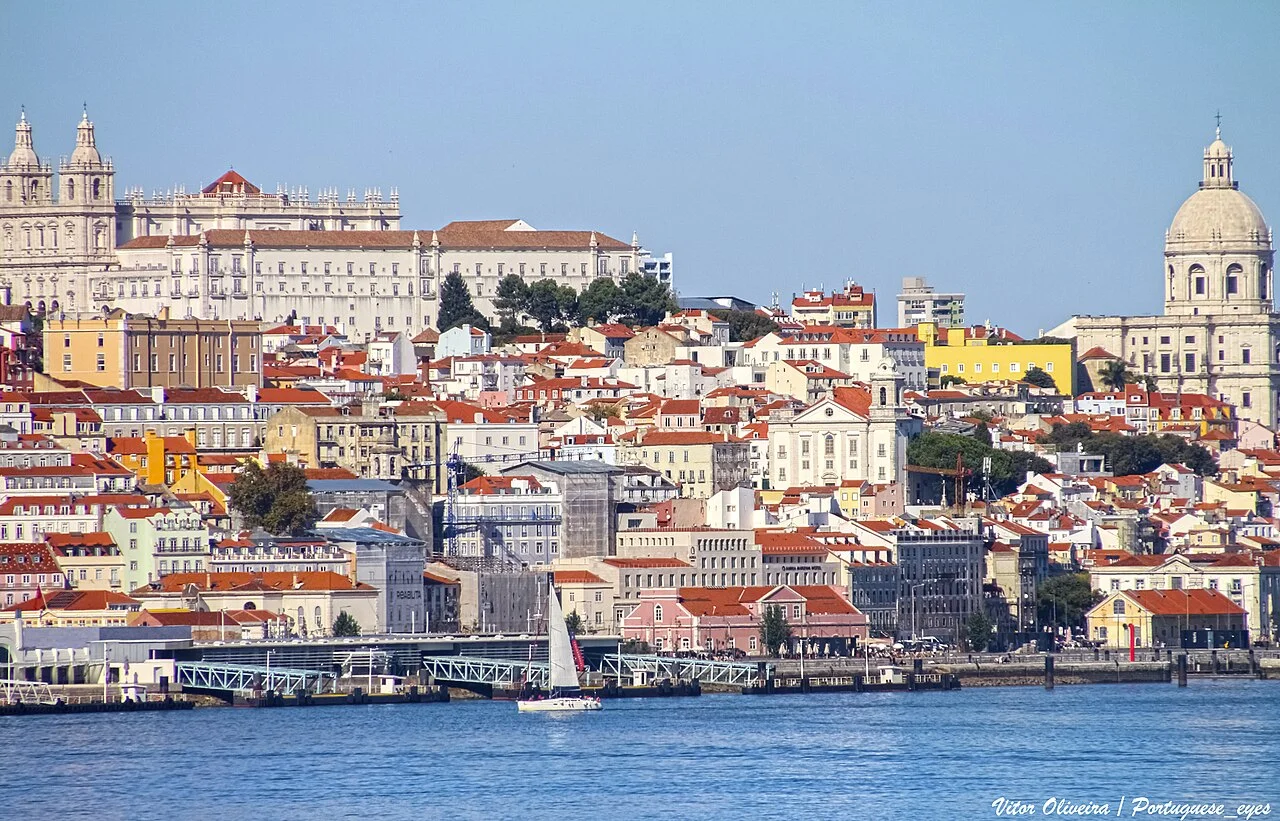
Lisbon’s different urban histories meet along the Tagus: Alfama’s tightly folded lanes, the fortified hilltop and the broad geometry of the rebuilt lower city. Belém lies farther west, where royal monuments connect the riverfront with Portugal’s maritime expansion. These are distinct settings, each with its own scale and architectural character, rather than one continuous cluster of sights.
Suggested stay: 3 nights or more. Adapt the pace to your interests.
Follow the older lanes and stairways for tiled façades, small squares and river viewpoints. This is a living neighbourhood, keep noise down and expect steep, uneven walking.
Alfama’s character emerges from its street pattern: stairways, short lanes and small squares interrupt the steep hillside below the castle. The frequent changes in level create sudden views towards tiled roofs and the Tagus. Doorways, washing lines and neighbourhood businesses sit within the same streetscape, keeping the district’s domestic scale visible.
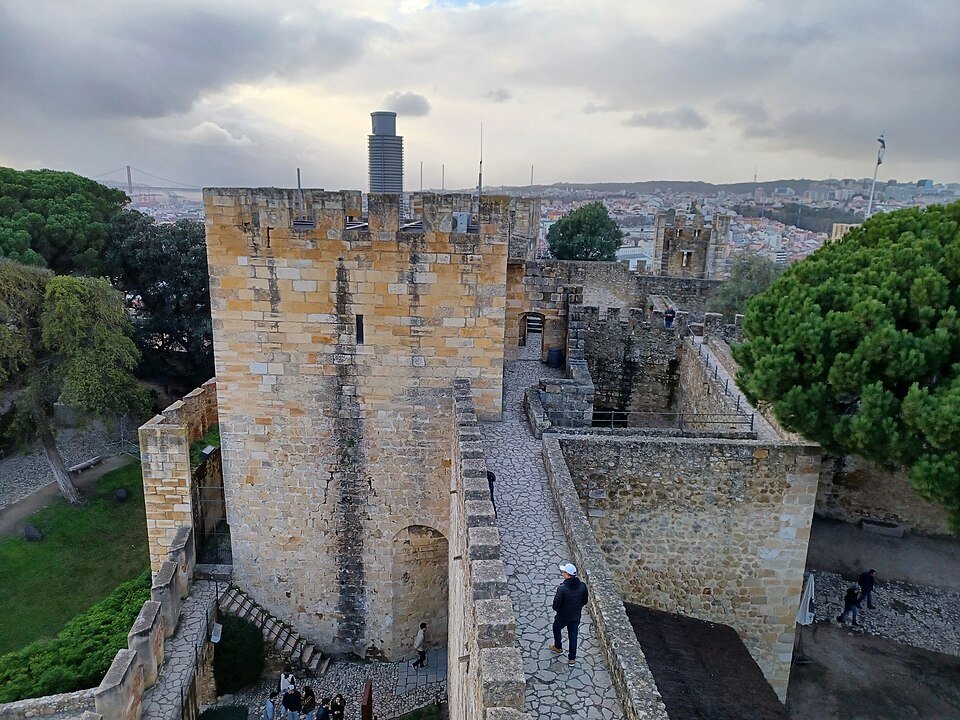
Explore the hilltop fortress and look across the red roofs to the Tagus. Check the official entrance and current tickets, the climb and stone surfaces deserve proper shoes.
The castle’s origins lie in the Islamic fortification of the eleventh century, but later rebuilding gave it much of its Gothic military form. Towers, wall-walks and the inner enclosures show successive defensive decisions. The archaeological area also preserves traces of Islamic houses and earlier settlement; its access is through the operator’s designated guided visit.
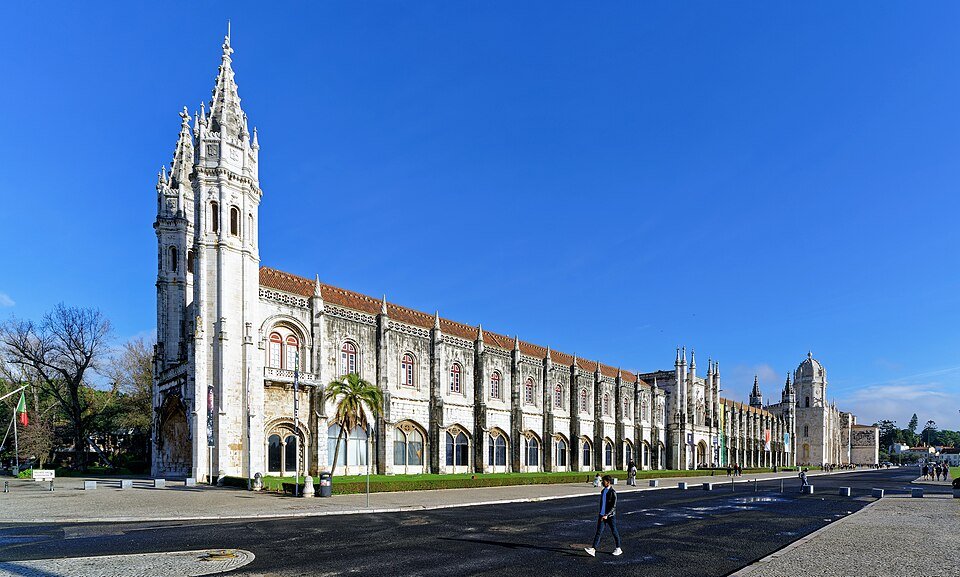
Belém’s monumental Manueline cloister rewards a dedicated visit. Check which spaces your ticket covers and reserve through the monument’s official service.
Manuel I commissioned the monastery as a major royal foundation beside the Tagus. The elaborate church portals and two-storey cloister demonstrate the Manueline taste for densely worked stone, with contributions from masters including Diogo de Boytac and João de Castilho. Church and monastic spaces have related histories but distinct visitor arrangements.
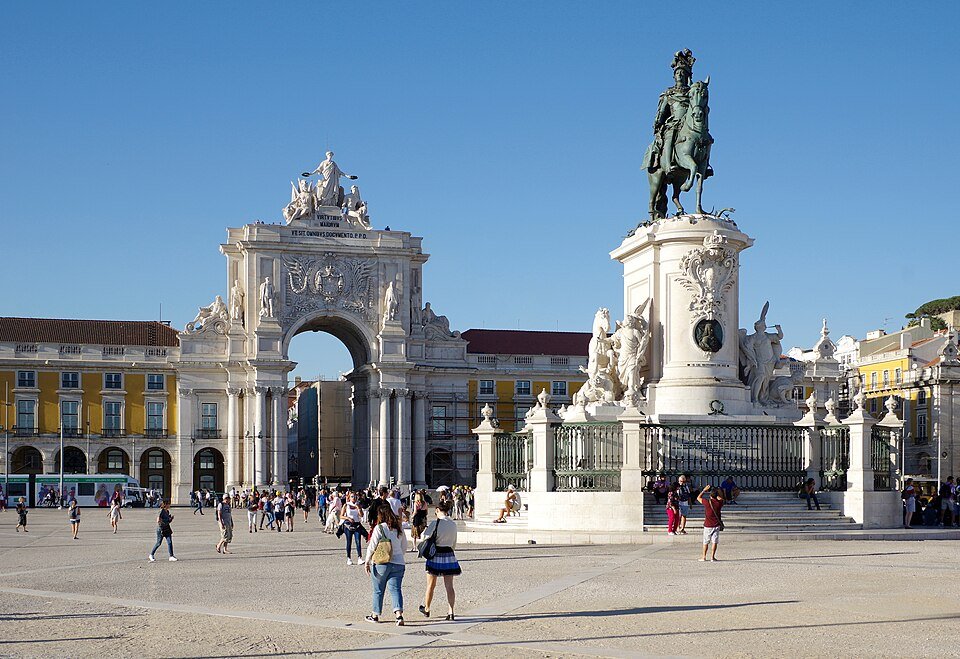
Enlarge photoPraça do Comércio, José I’s statue by Machado de Castro and the Rua Augusta arch. Photo: Berthold Werner · Wikimedia Commons · CC BY-SA 4.0. Cropped for display.
Praça do Comércio & the waterfront
Make the broad riverside square a spacious pause between sightseeing chapters. Continue along the river rather than squeezing every hill into one morning.
The square occupies the setting of the royal waterfront palace destroyed in the 1755 earthquake. Its arcaded sides and opening towards the river express the ordered rebuilding of the lower city. Machado de Castro’s equestrian statue of José I stands within that composition, while the Rua Augusta arch frames the route back into the street grid.
Reserve popular monuments and any fado dinner you particularly want. Check the exact ticketed space and arrival time. Tram 28 is regular public transport, not a guaranteed uncrowded sightseeing service.
With children & at your own pace
Mix one major interior with waterfront time. A compact stroller can still be awkward on Alfama’s stairs, plan a flatter alternative and transport back.
Access & getting around comfortably
Hills, polished calçada paving and tram steps vary considerably. Ask the attraction and hotel about the actual entrance and lift, rather than relying on a neighbourhood-wide accessibility claim.
Season & conditions
Spring and autumn suit city walking. In hot weather, keep the steepest climbs for earlier or later and book indoor visits around the middle of the day.
Eat & drink
A LOCAL DINING OPTION
Varanda de Lisboa
A restaurant at Hotel Mundial for a planned sit-down meal above the city. Check menus, hours and reservations directly.
Fewer than 15 rooms? Contact the hotel directly. 15 rooms or more?Ask ATA for low group rates → We use existing agreements where available and negotiate for your group when needed. We respond within 48 hours, allowing for worldwide time zones.
Getting here & local help
Plan the last part too
Lisbon Airport has metro and other ground connections. Choose a neighbourhood before booking, walking uphill with luggage is a different proposition from a flat route on the map. Use Carris and Metro Lisboa for current routes.
Use the official resource below for local information, current visitor arrangements and tourism contacts. For a specific attraction or booking, contact its operator directly.
Written for ATA, published October 25, 2026. Official resources are linked beside the subjects they support. A live source link is not a guarantee that conditions will remain unchanged.
Lisbon: Lisbon’s historic skyline and Tagus waterfront. Photo: Vitor Oliveira · Wikimedia Commons · CC BY-SA 2.0. Cropped for display.