CZECH REPUBLIC · Central Bohemia · Essential introduction
Kutná Hora
Silver beneath your feet, Gothic ambition above your head.
Kutná Hora’s great buildings make more sense when you remember the silver that paid for them. Combine a spectacular church with the story of mining and the smaller streets between the sights. Sedlec is a separate part of the visit, not simply the next doorway.
Silver connected Kutná Hora’s underground labour with royal finance and ambitious religious building. That relationship gives a natural thread to the visit: the museum and mine, the Italian Court and St Barbara’s extraordinary architecture each explain a different part. Sedlec has its own monastic and cemetery history outside the old centre, and deserves to be understood on those terms.
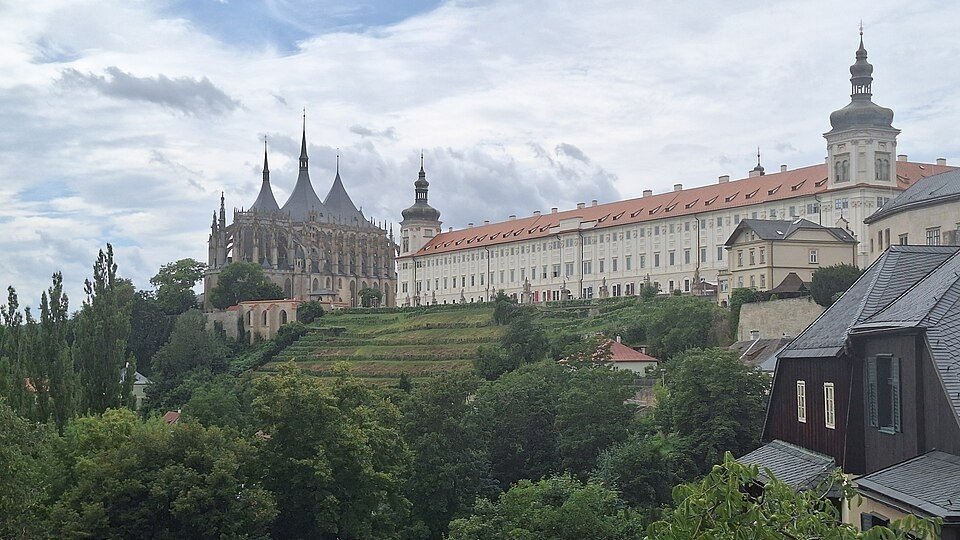
St Barbara’s dramatic roofline, buttresses and vaulted interior express the ambition of a town enriched by silver. Dedicated to the patron saint of miners, the church belongs within that economic story as well as the history of Gothic architecture. Walk around the exterior before entering: the changing outline and broad terrace reveal its scale, while the interior draws attention to the craftsmanship and imagery that survive within it.
Plan your visit Check current visitor information and respect services or restricted areas.
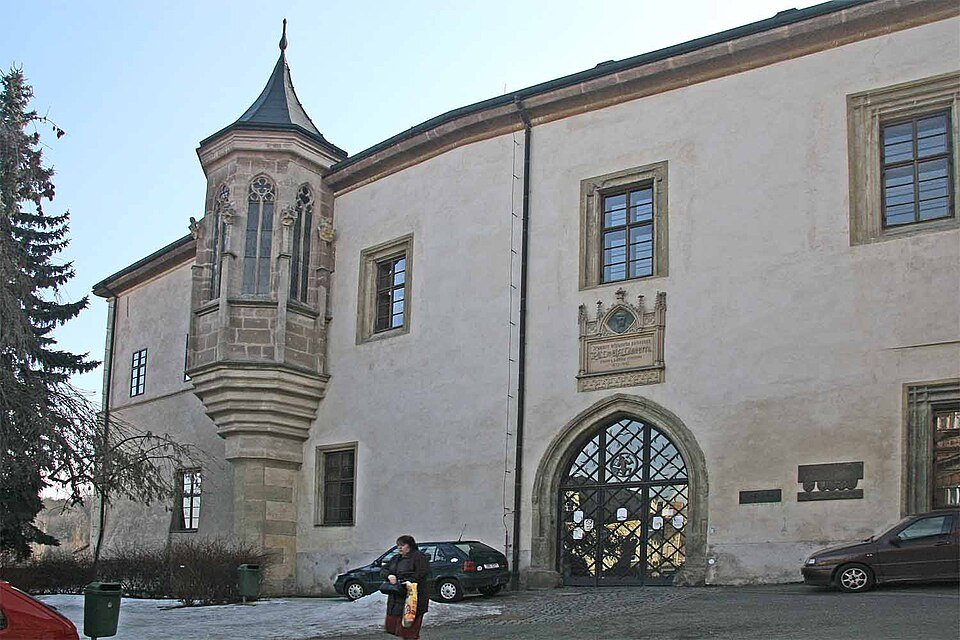
Hrádek, home of the Czech Museum of Silver. Photo: Zp at Czech Wikipedia · Wikimedia Commons · CC BY-SA 3.0. Cropped for display.
02
Czech Museum of Silver
The museum at Hrádek brings the wealth beneath Kutná Hora back into view. Displays and the separately arranged medieval mine experience connect the town’s grand buildings with the extraction and processing of silver. The contrast matters: what visitors see above ground was supported by difficult work below it. Hrádek itself, a substantial historic building close to St Barbara’s, is part of the story rather than a neutral museum container.
Plan your visit Mine tours can involve narrow spaces and equipment, check age, access and booking conditions.
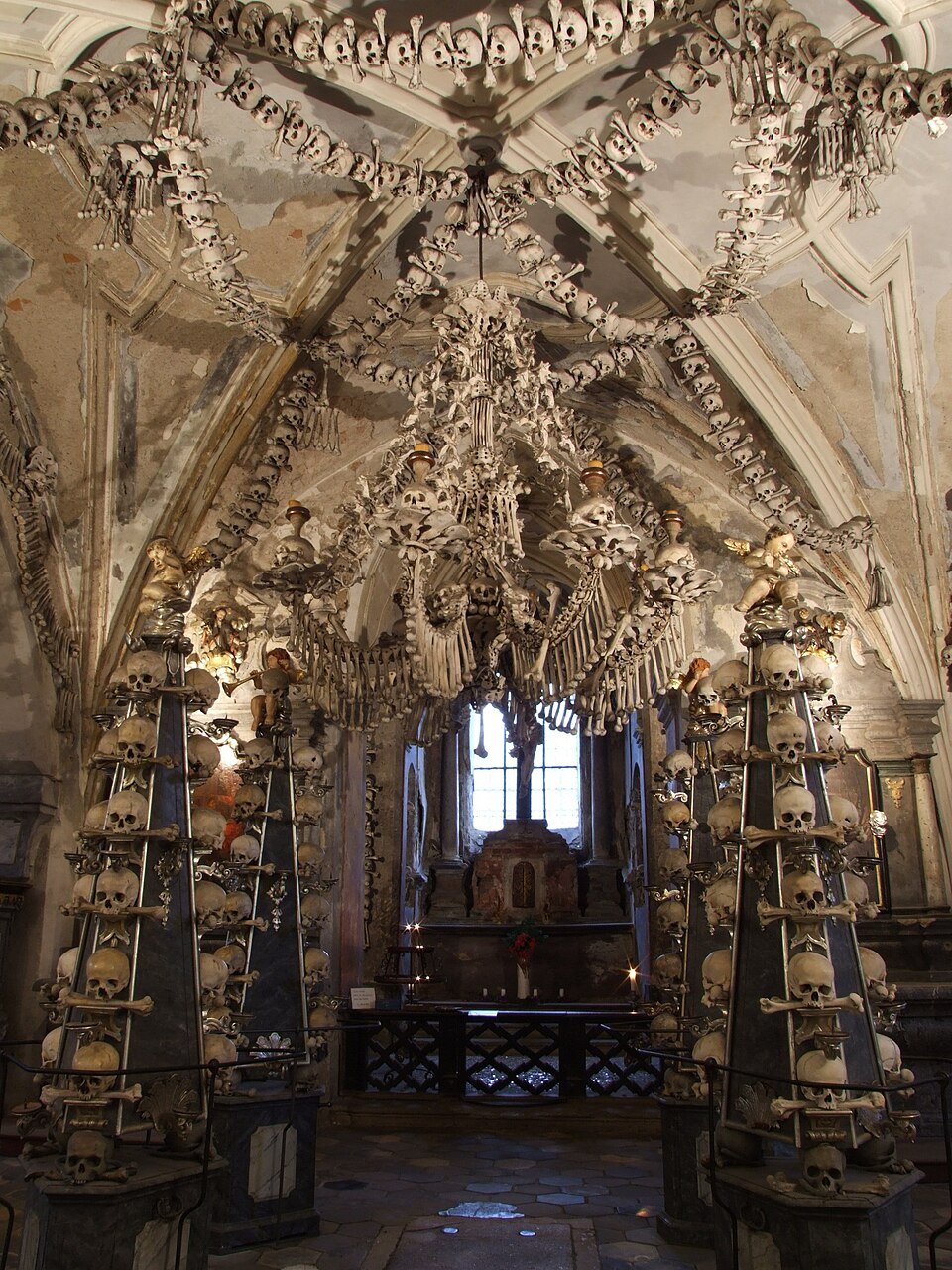
The ossuary occupies the lower chapel of the Cemetery Church of All Saints, associated with Sedlec’s former Cistercian monastery. The remains came from graves in the surrounding cemetery; later decorative arrangements made them into an emphatic meditation on mortality. František Rint completed his nineteenth-century work in 1870, including the famous chandelier and Schwarzenberg arms. Understanding that burial history gives the interior a meaning beyond its startling appearance.
Plan your visit Check ticket combinations, visiting rules and photography restrictions directly. Sedlec is outside the old centre.
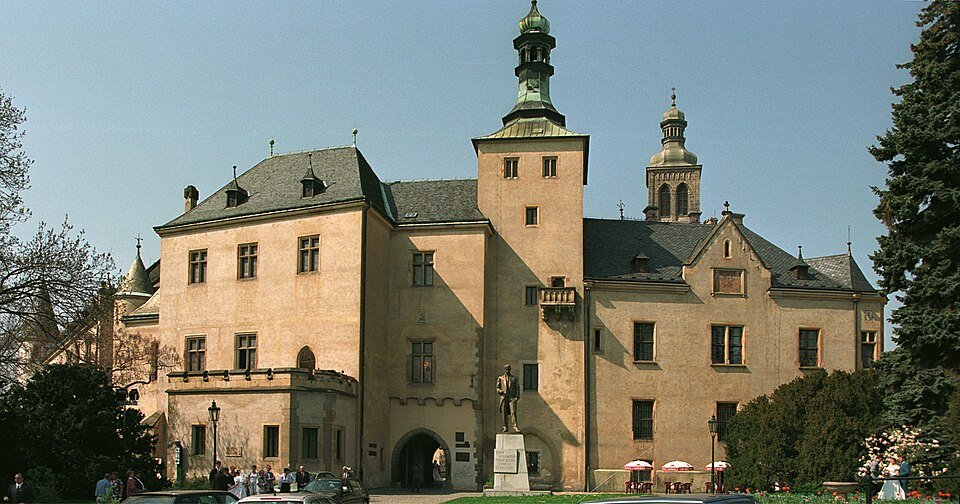
Italian Court in Kutná Hora. Photo: Jerzy Strzelecki · Wikimedia Commons · CC BY 3.0. Cropped for display.
04
Historic lanes & the Italian Court
The Italian Court links the old town’s silver with the manufacture of royal coinage. Its enclosed setting and architectural detail make a useful counterpoint to the soaring church of St Barbara: one expresses civic and religious ambition, the other the administration of wealth. Follow the connecting lanes rather than treating the buildings as isolated stops. The changing street levels and smaller historic houses help explain the shape of the mining town.
Plan your visit Ask the destination service about current Italian Court tours and an accessible walking route.
Choose the visits that matter most to you, then check their official ticket pages for available dates, tour languages and entry arrangements. Keep confirmed visiting times in mind when planning your transport and hotel stay.
Sedlec and the historic centre are separate parts of the visit. Plan the connection between them, and check whether your train arrives at the main station or the town station.
Sedlec monuments and the historic centre have their own arrangements. Check timed entry and combined-ticket conditions with the operator, rather than assuming one admission covers the whole town.
The ossuary contains human remains, decide in advance whether it suits your children. For a mining visit, check the operator’s age, space and access restrictions before booking.
An overnight stay creates time for the cathedral surroundings and quieter streets after a busy day. Leave some room for a meal instead of hurrying between every monument.
Begin at St Barbara’s and walk the terrace beside the Jesuit College.
Choose a mining museum visit with a suitable pre-booked tour.
Visit Sedlec with time for the transfer, or save it for the following morning.
A suggested outline, adjust it to opening days, bookings and your pace.
Enjoy the place, not just the sights
Pause. Taste. Stay a little.
Pause around the old centre and enjoy the views beside the Jesuit College. The pleasure of staying overnight is having time for a relaxed meal after the busiest sightseeing hours.
How long to stay
One or two nights provide a calmer alternative to fitting the whole town into a Prague day trip.
A useful local contact
Eat & drink.
Check the menu and availability directly, especially for a group.
Restaurace Vila U Varhanáře
A dining stop near St Barbara’s Cathedral. The operator currently says terrace tables cannot be reserved, ask about an indoor reservation if you need a guaranteed table.
Suggestions are based on location and the hotels’ published information, not personal inspections. Confirm room types, accessibility, parking and current rates directly.
Main-line trains arrive outside the historic centre, check local rail or bus connections for Kutná Hora město and Sedlec. Plan the transfer between the centre and the ossuary rather than rushing both on foot.