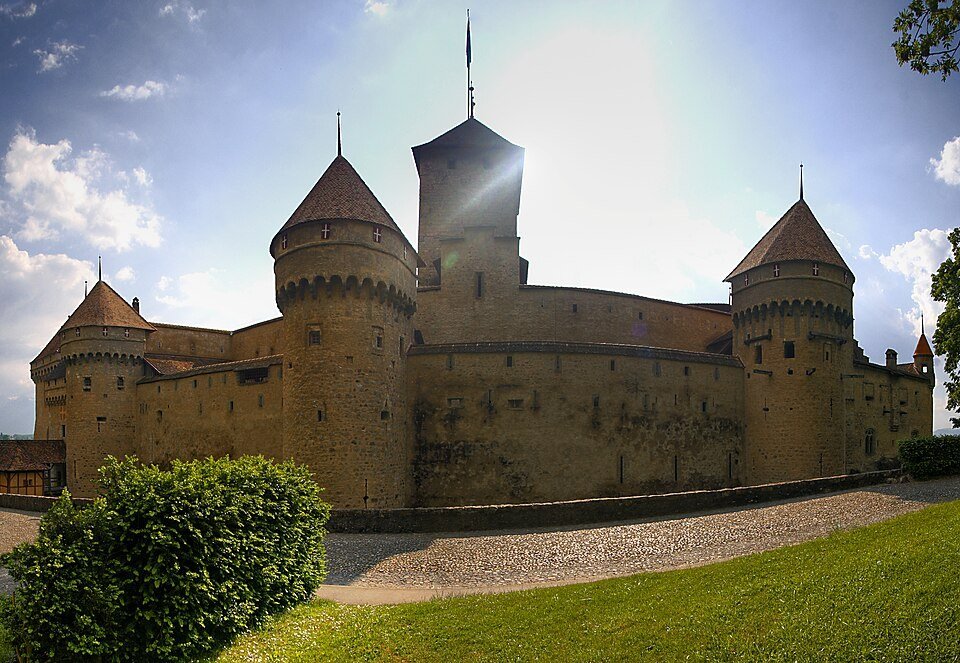
Courtyards, stone vaults and lake views give this shoreline fortress a story much larger than its small island.
Chillon is shaped by the rock beneath it and the narrow corridor between the Alps and Lake Geneva. Its first written mention dates from 1150, when it belonged to the counts of Savoy. Successive periods of Savoyard, Bernese and Vaudois control created the mixture of fortified walls, residential rooms and administrative spaces encountered today.
Look back from the shore before going inside: lake, route and rock explain the castle’s strategic position. Leave time for both the building and its surroundings.
The castle follows the island’s oval outline, with a defensive face towards the land and a more residential aspect towards the lake. Its position allowed the Savoy family to control travellers and goods moving along the route towards the Great Saint Bernard Pass. The clustered towers and courts are therefore part of a transport and power landscape, not simply an isolated picturesque fortress.
Enlarge photoGothic vaults and exposed island rock in Chillon Castle’s underground rooms. Photo: Ioan Sameli from Switzerland · Wikimedia Commons · CC BY-SA 2.0. Cropped for display.
Inside the castle
Follow the visitor route through halls, courtyards and lower spaces. Medieval circulation means stairs and uneven surfaces; ask the castle about the precise access needed by your party.
The Gothic underground vaults once served storage functions, including provisions and wine, and later became associated with imprisonment. Above them, the visitor route reveals halls, courtyards and the chapel of the Savoy rulers, with fourteenth-century painted decoration. Comparing these spaces shows how security, domestic life, ceremony and religious practice fitted into a confined island site.
Book the right visit
Self-guided entry, audio guides and guided arrangements are different choices. Check the current calendar, last entry and ticket conditions, especially in winter.
For tour operators
The castle publishes advance-booking requirements for groups. Its agency guidance asks for written notice at least 72 hours ahead; confirm directly for your group and catering needs. Do not confuse an attraction’s people threshold with ATA’s hotel room threshold.
Allow two hours as a suggested visit, plus travel along the shore. Reserve ahead, carry only what you need inside, and keep a little time for the lakefront afterwards.