A city of neighbourhoods, from temple streets to contemporary skylines.
Tokyo becomes easier to understand through neighbourhoods with distinct roles. Asakusa brings worship and commerce together around Sensō-ji; Ueno gives space to major collections; Meiji Jingū creates a forested sacred precinct within the metropolis; Marunouchi shows the railway gateway and business centre of a modern capital. These contrasts make a stronger introduction than rushing between distant landmarks. Give each area enough time for the streets, approaches and public spaces around its main attraction.
Tokyo becomes more rewarding when you choose neighbourhoods instead of trying to cross the whole city for every famous sight. Pair a substantial collection or sacred site with the streets around it, then leave time for food, design and ordinary urban life. An efficient train does not remove the time needed to navigate a large station.
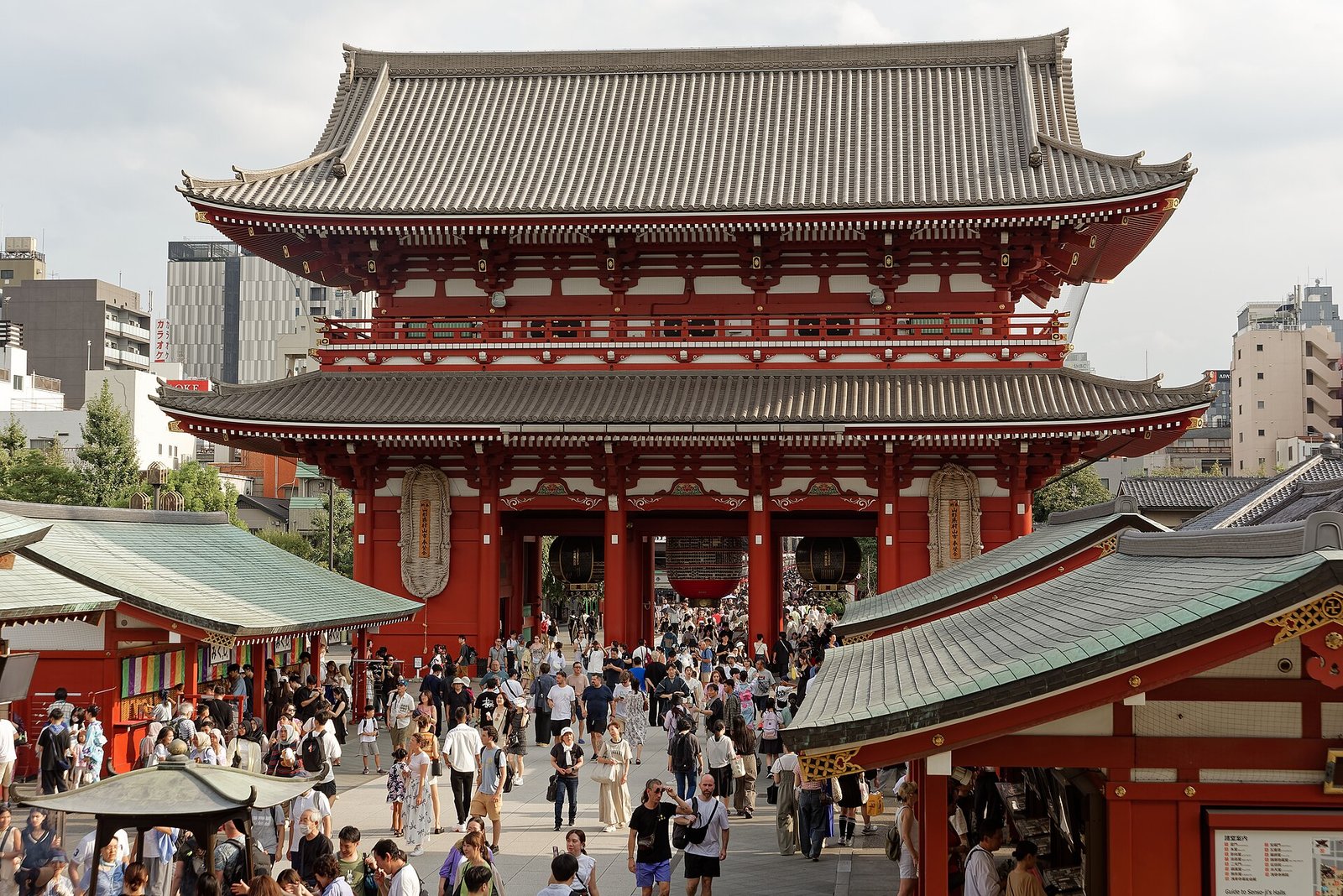
Sensō-ji gives Asakusa a powerful centre of Buddhist worship, approached through gates and the shopping street of Nakamise. The temple is associated with Kannon, and its precinct remains an active religious place amid the district’s crowds and commerce. The photograph shows Hōzōmon, the inner gate near the main hall, rather than the separate Kaminarimon entrance gate. Many visible buildings were reconstructed after wartime destruction, making the continuity of religious practice as significant as the age of the surviving fabric.
Plan your visitRespect worship and photography notices; commercial lanes and temple spaces have different rhythms.
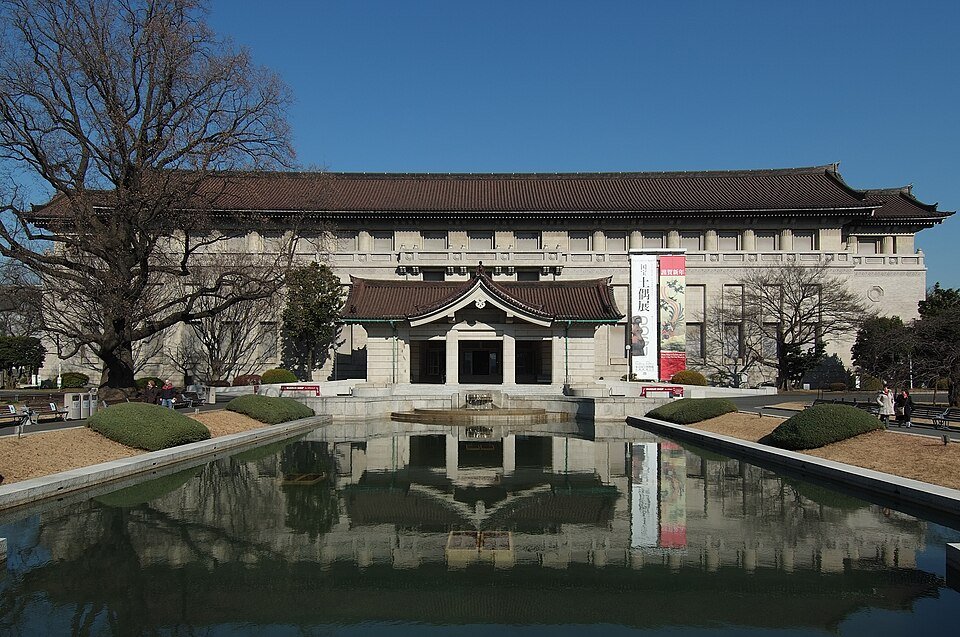
The Tokyo National Museum places Japanese art and material culture within a broad historical frame. In the Honkan, galleries connect periods and specialist subjects through works that may include ceramics, sculpture, painting, armour and textiles. Looking at a few objects closely often reveals more than trying to cover every room: materials, techniques and changing uses connect the displays with temples, households and institutions encountered elsewhere in Japan. Exhibitions and individual works rotate, so use the current gallery guide to shape a focused visit.
Plan your visitCheck the current galleries and special-exhibition tickets.
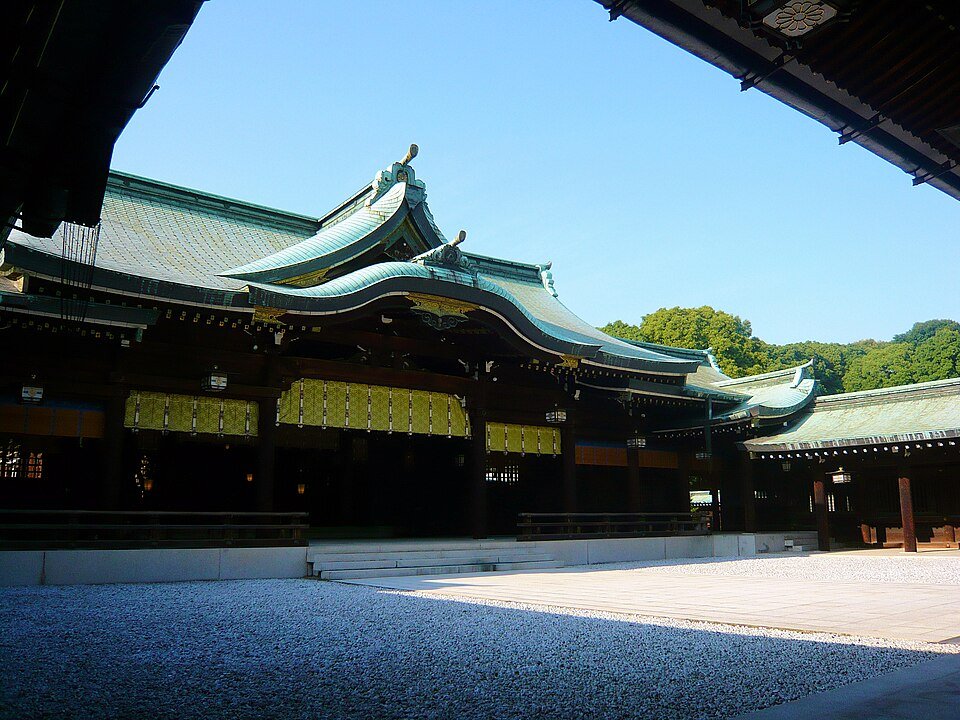
Meiji Jingū commemorates Emperor Meiji and Empress Shōken within a deliberately planted forest. The approach is part of the experience: broad paths, tall trees and torii gradually separate the shrine precinct from the surrounding city. Established in 1920, it connects modern Japanese history with continuing Shinto practice. The buildings are best understood through that setting and purpose, with ceremonies and worship taking precedence over sightseeing. Allow time for the transition between the busy neighbourhood outside and the quieter spaces within the grounds.
Plan your visitCheck the current gate times and respectful visiting instructions.
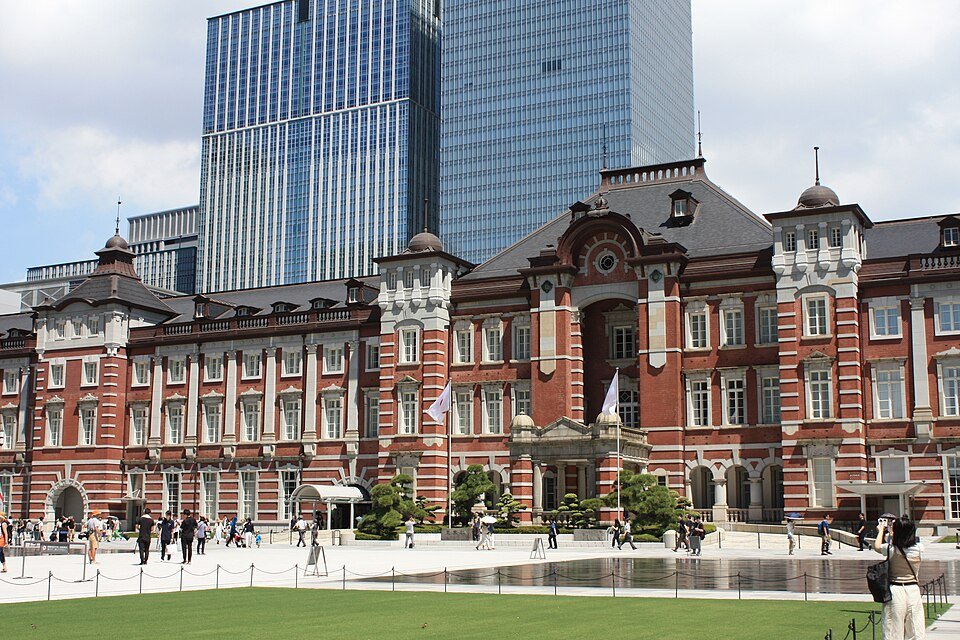
Tokyo Station’s red-brick Marunouchi building provides a clear starting point for understanding the capital’s modern development. Designed by Kingo Tatsuno and opened in 1914, its restored domes and long façade face a district of offices, public squares and streets leading towards the Imperial Palace area. The contrast between railway architecture and newer towers reveals successive layers of city building. This is a walk about connections: the arrival of travellers, the organisation of business and the ceremonial breadth of the capital’s central spaces.
Plan your visitCheck access to any garden or interior separately; the wider public walk is another experience.
Choose an east-side day around Asakusa and Ueno, then a different day for Meiji Jingū and a western neighbourhood. Reserve any special exhibition or viewing deck you care about and leave the rest flexible. A short list with room for meals works better than constant cross-city rail travel.
Choose your fixed-time visits
Check the official programme for Sensō-ji & Asakusa before fixing the rest of the day. Museum collections, guided visits and outdoor areas may follow different admission arrangements. Confirm the actual entrance, language and meeting time for anything booked.
Plan for your group
Ask the sites you choose about steps, toilets, seating and an accessible route. For a group, arrange the meeting point, vehicle drop-off and guide in advance; the best route for a quick individual visit is not always the best group route.
Make room for the place
Use the current opening days to choose the order. Give one substantial sight the morning, keep room for a sit-down lunch, and make the afternoon a choice rather than another deadline.
An unhurried introduction
A day to make your own.
Begin with Sensō-ji & Asakusa, using the current visitor arrangements.
Leave time for lunch and a comfortable transfer rather than another immediate appointment.
Choose Tokyo National Museum & Ueno or Marunouchi & the station-city setting for a contrasting afternoon, according to weather and energy.
Adjust this editorial starting point to current access, weather and opening days.
Enjoy the place
Leave room between the sights.
The most rewarding introduction combines Sensō-ji & Asakusa with time around Marunouchi & the station-city setting. Look at the streets and landscape between the stops, and leave room for an everyday café, market or neighbourhood walk instead of treating the place as a checklist.
Allow 4 nights if it fits your wider route; travel between regions needs time of its own.
A taste of the place
Eat & drink.
Make time for a local meal.
Choose a few food experiences deliberately: a neighbourhood noodle shop, a department-store food floor or a reserved restaurant. Small restaurants may have limited seats or a narrow menu, so discuss dietary requirements and group size before arriving.
Choose the neighbourhood and transport connection first. A compact room near an easy station route can be more practical than a distant skyline view; confirm bed layout, luggage space and the final entrance.
Ask the property about total charges, room access, arrival with luggage, cancellation terms and any group requirements. Confirm the actual room and access route before booking.
Choose the airport and rail connection that suit the actual hotel district. Check the station exit and final walk, not just the station name. Large interchanges, luggage and platform changes can make a short rail journey a longer door-to-door transfer.
The official local resource is the place to check current exhibitions, guided walks, seasonal openings and events. Ask about language, group admission and access for the particular visit you want, rather than assuming every programme runs daily.
Official resources are linked beside the information they support. Suggested stays and routes are editorial starting points, not confirmed schedules. Property links provide direct contact, not a personal inspection or rating. Check changing details with the provider. Sources reviewed October 27, 2026.