A city for eating well, looking closely and enjoying urban life.
Osaka is especially rewarding when its monumental history is set beside the places where the city eats, trades and gathers. The castle tells a story of political ambition and rebuilding; Dōtonbori and Kuromon reveal different forms of food and entertainment culture; Nakanoshima connects waterways with civic architecture. These contrasts give the city more range than a single neon-filled evening, while still leaving room for the exuberance of its best-known streets.
Osaka offers a lively contrast to temple-focused days elsewhere in Kansai. Dōtonbori supplies a famous evening setting, but a castle museum, a riverside cultural district and neighbourhood food streets add depth. Let meals and local atmosphere be part of the plan rather than treating the city only as a place to sleep between excursions.
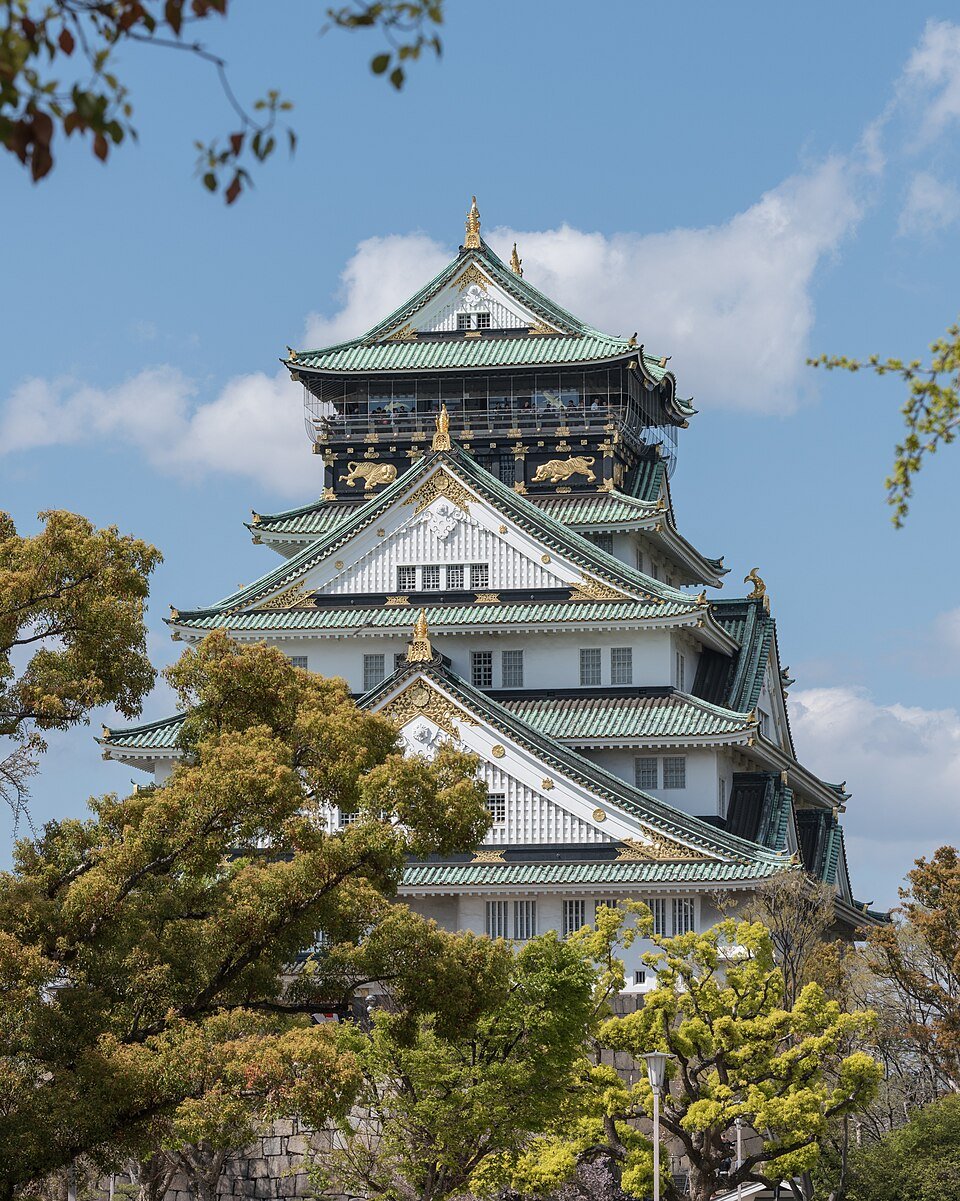
Osaka Castle’s tower presents a museum of the castle and the figures associated with its turbulent history. The site began with Toyotomi Hideyoshi’s late-sixteenth-century stronghold, suffered destruction and was subsequently rebuilt under the Tokugawa. The present main tower is a modern reconstruction, so it should be read alongside the older defensive landscape rather than mistaken for an untouched medieval interior. Massive stone walls, gates and moats make the wider park especially useful for understanding the scale of the original seat of power.
Plan your visitCheck the current entry system, interior access and park distances.
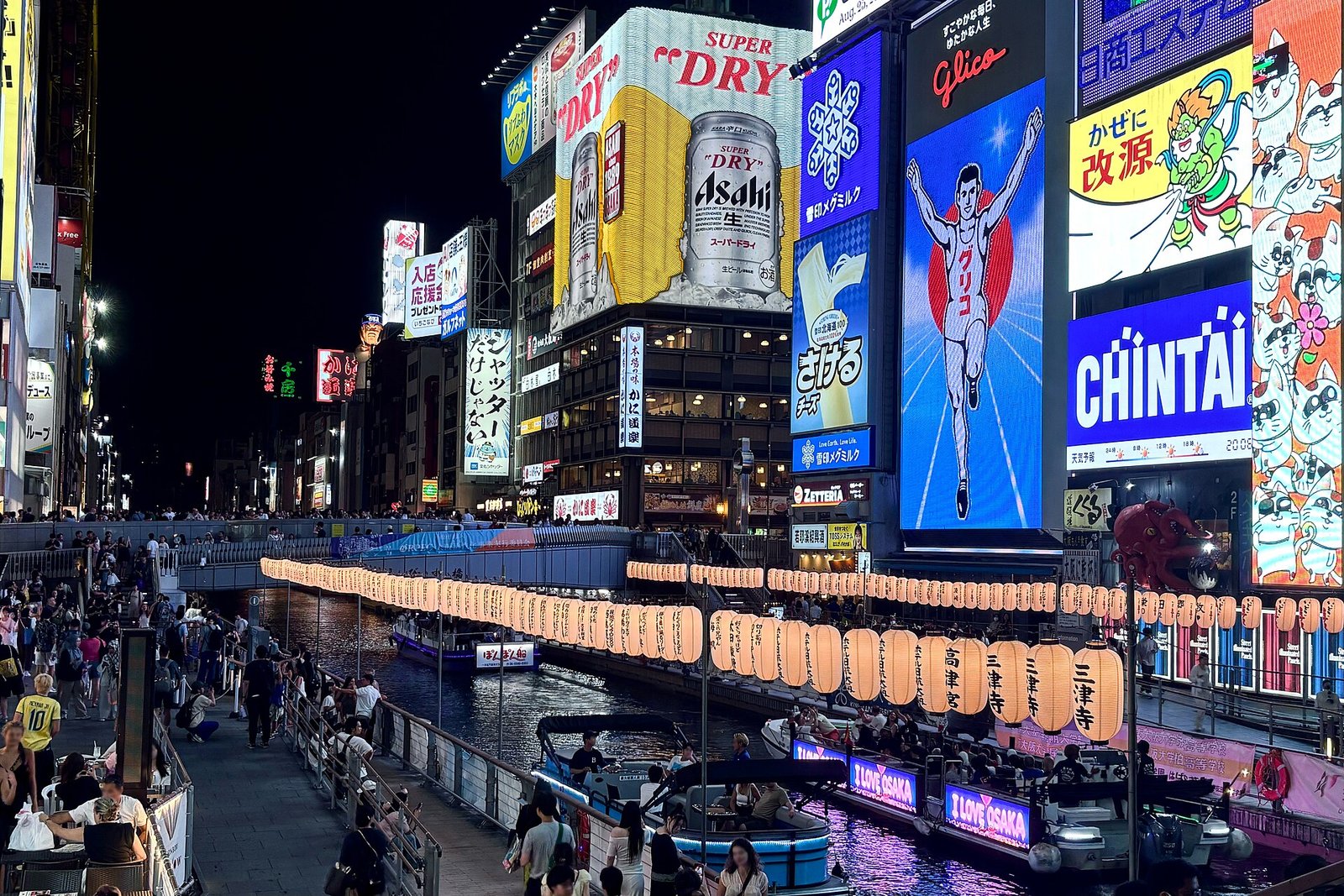
Dōtonbori developed as a district of theatres and entertainment, and that appetite for display remains visible in its illuminated signs, oversized shopfront figures and busy canal edges. Food businesses now shape much of the street experience, making it a place to compare menus and specialities as well as watch the passing crowds. The canal provides a useful organising line through the activity. An evening visit emphasises light and spectacle, while daylight makes the buildings and surrounding shopping streets easier to read.
Plan your visitChoose meeting points carefully in busy pedestrian areas.
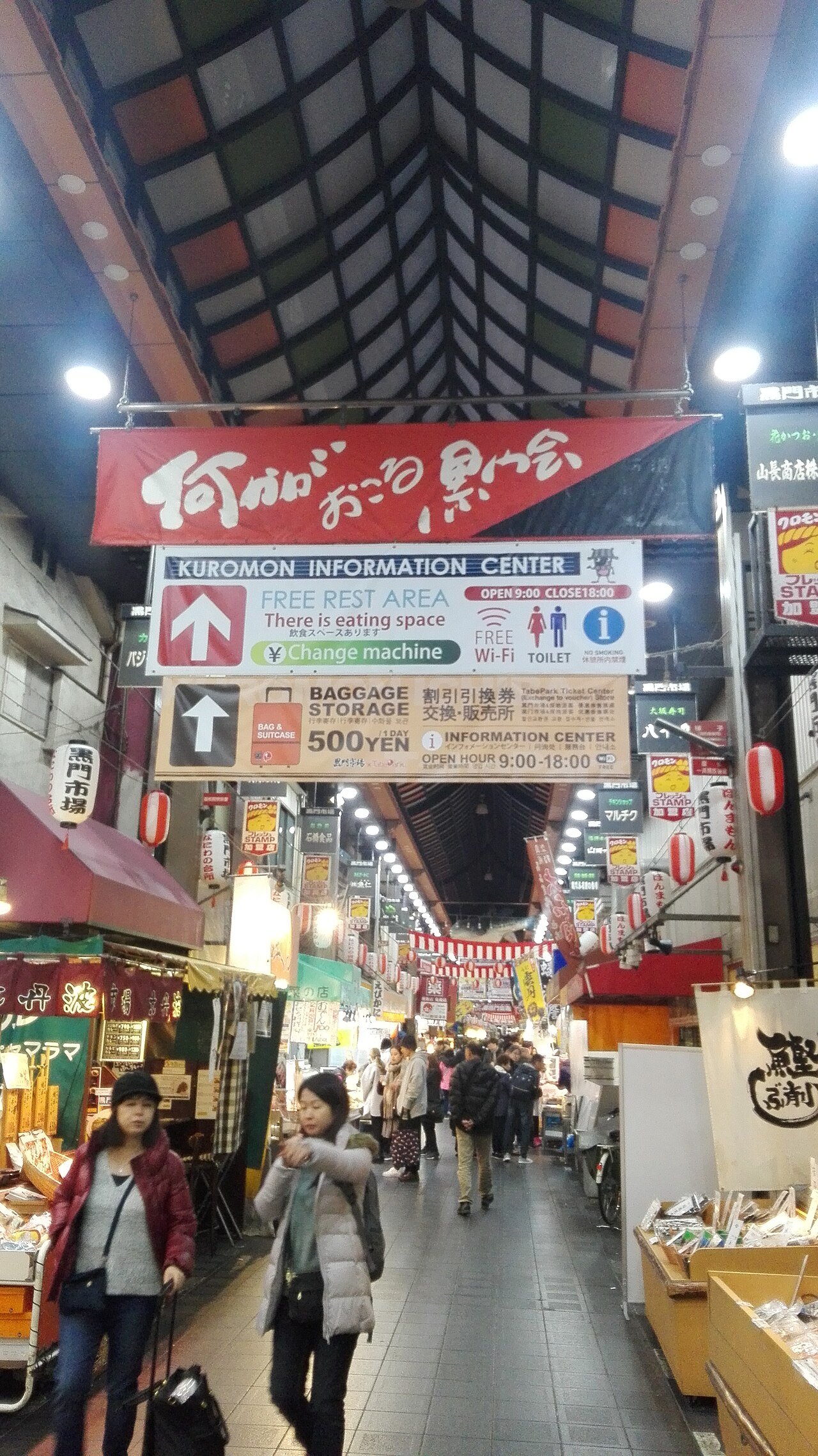
Kuromon brings together the display and sale of food under a covered market street. Fish, seafood, vegetables and specialist ingredients sit alongside foods prepared for immediate eating, showing how a market can serve several audiences at once. Its name recalls the black gate of a nearby temple, linking the present commercial district with an older neighbourhood landmark. Look beyond the busiest tasting counters to the specialist shops and everyday produce: they give the walk more substance than a sequence of snacks.
Plan your visitCheck shop hours, seating and current visitor etiquette.
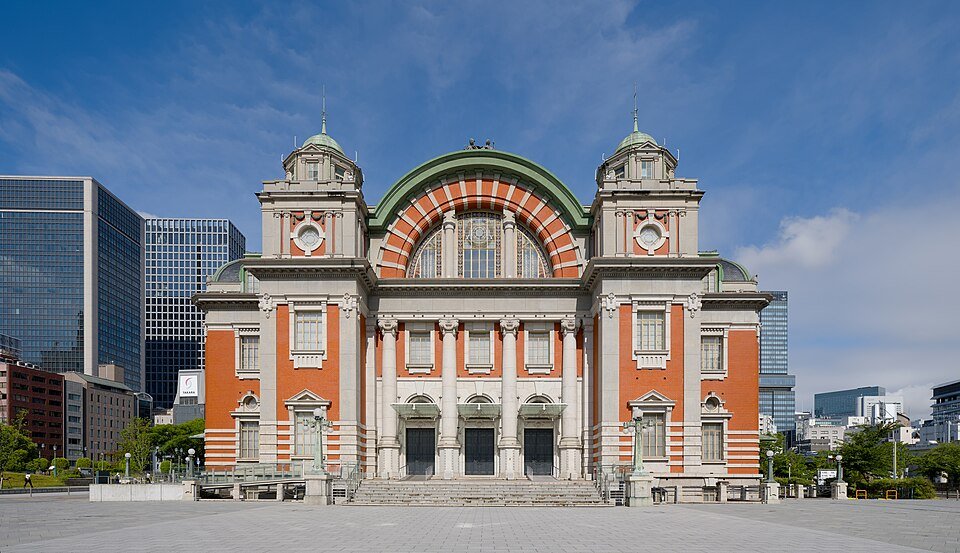
Nakanoshima lies between the Dōjima and Tosabori rivers, giving Osaka’s civic buildings and cultural institutions a distinctive island setting. The red-brick Central Public Hall, completed in 1918 with support from businessman Einosuke Iwamoto, is an especially clear expression of public ambition. Riverside paths connect this historic architecture with newer cultural buildings and the surrounding business districts. The pleasure of the area lies in that changing relationship between water, public space and city life, with museums offering possible stops along the walk.
Plan your visitCheck museum exhibitions and admission separately from the public outdoor route.
Give the castle or an art museum a morning, then leave an afternoon for a neighbourhood and an evening meal in Namba. Choose any long day trip separately; a busy regional itinerary can otherwise leave no time to experience Osaka itself.
Choose your fixed-time visits
Check the official programme for Osaka Castle museum & park before fixing the rest of the day. Museum collections, guided visits and outdoor areas may follow different admission arrangements. Confirm the actual entrance, language and meeting time for anything booked.
Plan for your group
Ask the sites you choose about steps, toilets, seating and an accessible route. For a group, arrange the meeting point, vehicle drop-off and guide in advance; the best route for a quick individual visit is not always the best group route.
Make room for the place
Use the current opening days to choose the order. Give one substantial sight the morning, keep room for a sit-down lunch, and make the afternoon a choice rather than another deadline.
An unhurried introduction
A day to make your own.
Begin with Osaka Castle museum & park, using the current visitor arrangements.
Leave time for lunch and a comfortable transfer rather than another immediate appointment.
Choose Dōtonbori or Nakanoshima cultural district for a contrasting afternoon, according to weather and energy.
Adjust this editorial starting point to current access, weather and opening days.
Enjoy the place
Leave room between the sights.
The most rewarding introduction combines Osaka Castle museum & park with time around Nakanoshima cultural district. Look at the streets and landscape between the stops, and leave room for an everyday café, market or neighbourhood walk instead of treating the place as a checklist.
Allow 2–3 nights if it fits your wider route; travel between regions needs time of its own.
A taste of the place
Eat & drink.
Make time for a local meal.
Try okonomiyaki or takoyaki if they appeal, and compare small specialist restaurants rather than expecting one venue to serve every Osaka dish. Confirm ingredients, counter seating and group arrangements; the most atmospheric place may also be very small.
Choose Namba for the evening food-and-entertainment area or another rail hub for a different transport pattern. Check the actual station connection, room outlook and approach with luggage.
Ask the property about total charges, room access, arrival with luggage, cancellation terms and any group requirements. Confirm the actual room and access route before booking.
Osaka Station, Shin-Osaka and Namba are different hubs. Choose the airport or intercity connection for the exact district, then check the station exit and final walk. A Shinkansen arrival at Shin-Osaka is not the end of the hotel journey.
The official local resource is the place to check current exhibitions, guided walks, seasonal openings and events. Ask about language, group admission and access for the particular visit you want, rather than assuming every programme runs daily.
Official resources are linked beside the information they support. Suggested stays and routes are editorial starting points, not confirmed schedules. Property links provide direct contact, not a personal inspection or rating. Check changing details with the provider. Sources reviewed October 27, 2026.