JAPAN · OKAYAMA · SETOUCHI · BEYOND THE BEATEN PATH
Kurashiki
Canal-side storehouses, a serious art collection and the work of makers.
Kurashiki’s canal quarter brings together merchant storehouses, craft collections and an unusually strong art-museum tradition. White plaster walls and tiled roofs recall the movement and storage of goods; the Ohara Museum reveals how local industrial wealth supported an ambitious cultural project. Farther south, Kojima’s jeans shops connect the area’s textile history with contemporary manufacturing. Together they offer a richer picture than the canal’s picturesque frontage alone.
Kurashiki offers much more than a photogenic canal. Its former storehouses, art collection and craft traditions make a rewarding stay when you leave time for interiors and the smaller streets. The Kojima textile chapter is another part of the municipality and needs a separate local journey.
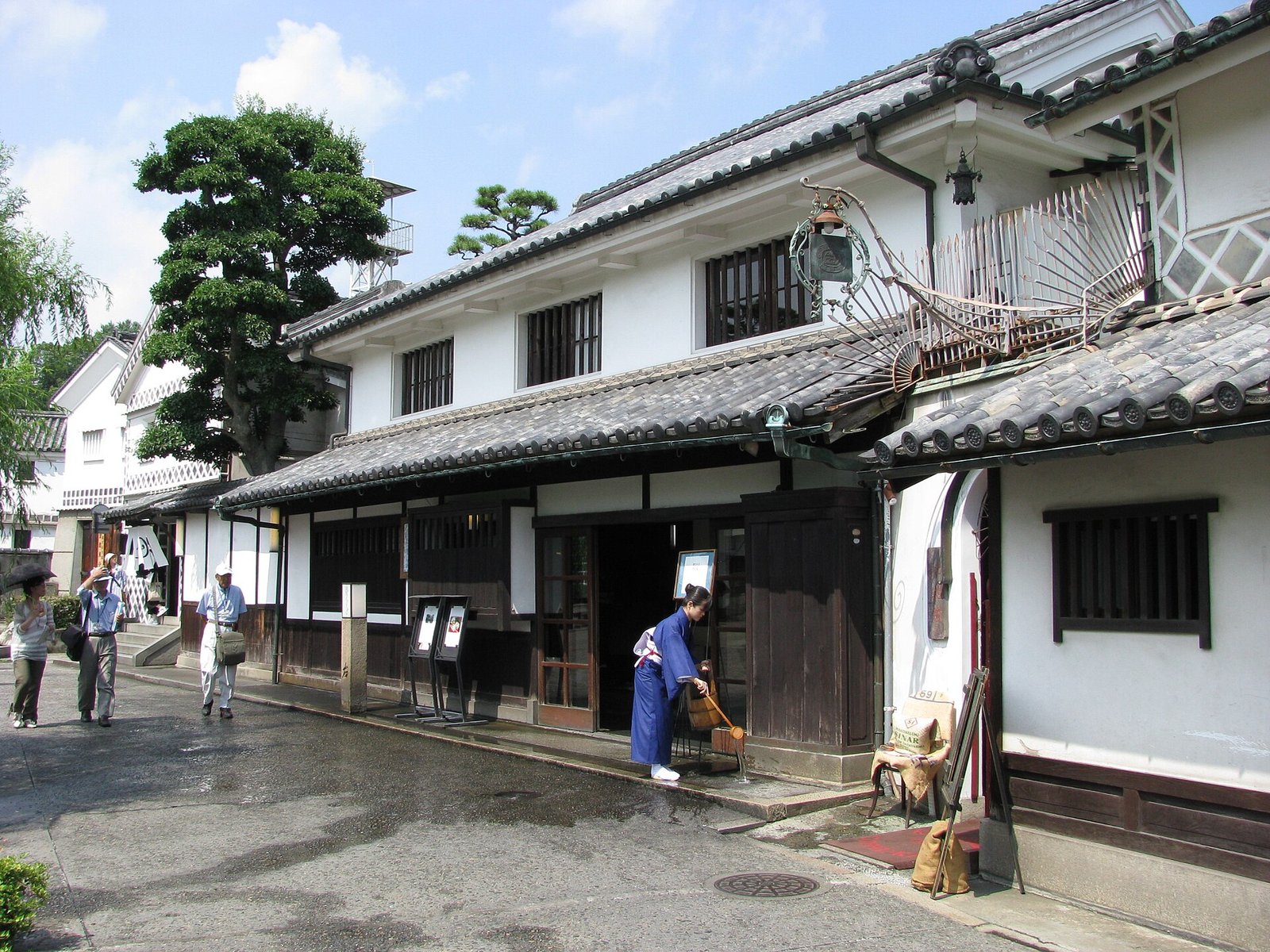
The Bikan quarter preserves a townscape of canal-side storehouses, merchant buildings, white plaster walls and dark tiled roofs. Water once belonged to the practical movement of goods; today it helps organise a walk through the historic centre. Look beyond the broad canal view to doorways, rooflines and the changing scale of the side streets. Museums, shops and adapted buildings show how a former trading district continues to find new uses without losing the outline of its older commercial life.
Plan your visitRespect residential and private spaces; choose a manageable route.
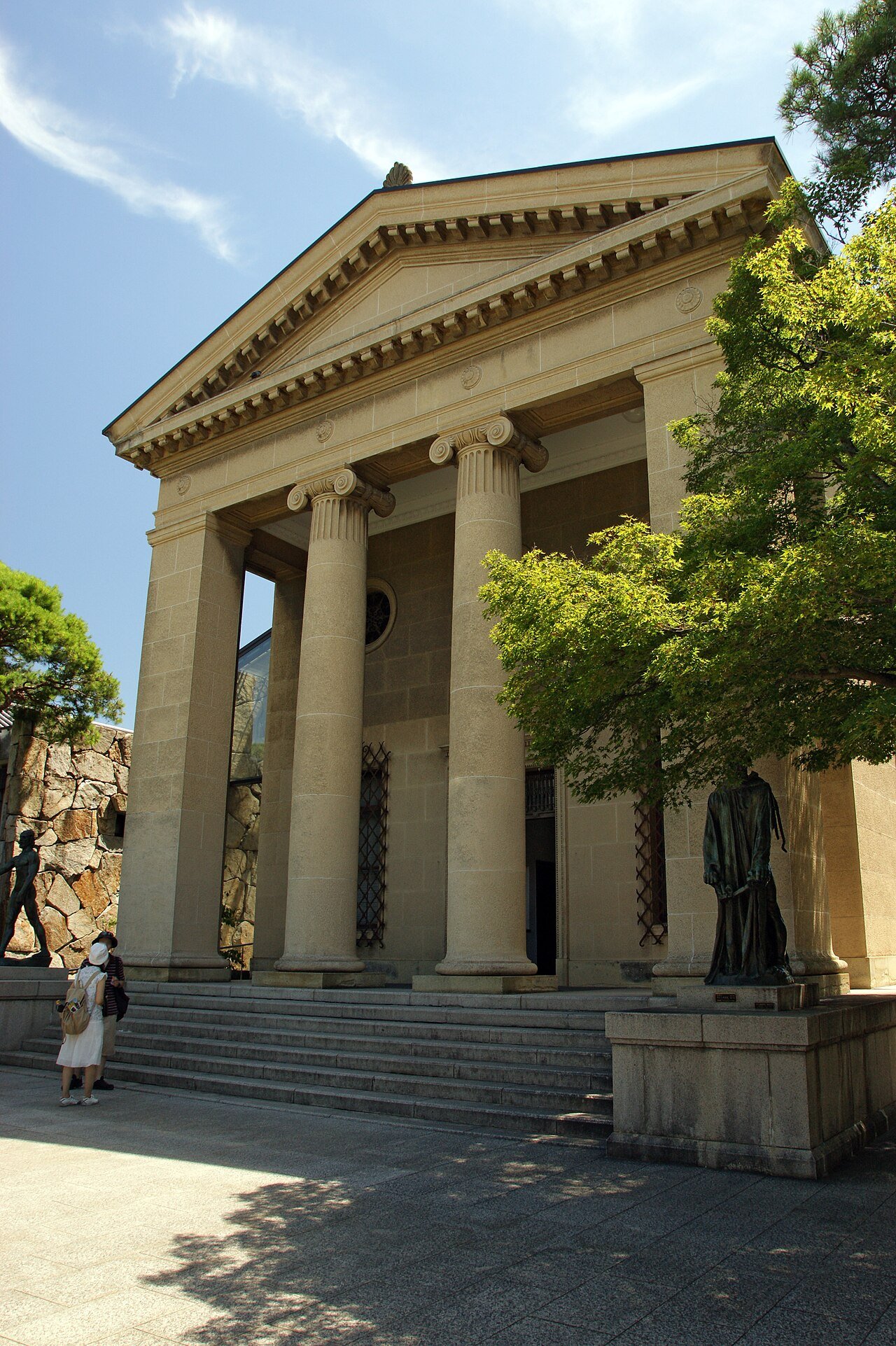
Founded in 1930 by Magosaburō Ōhara in memory of the painter Torajirō Kojima, the museum brought a major collection of Western art into a Japanese provincial city. Its columned main building creates a striking encounter with Kurashiki’s neighbouring storehouses. Works associated with artists such as El Greco and Monet are part of a wider institution that also considers Japanese art and craft. What appears on display varies, making the museum’s collecting history as important as any single familiar painting.
Current access: the museum’s Annex is closed for a long period. Check the official site for the galleries included in your visit.
Plan your visitCheck the current exhibition programme and ticket coverage.
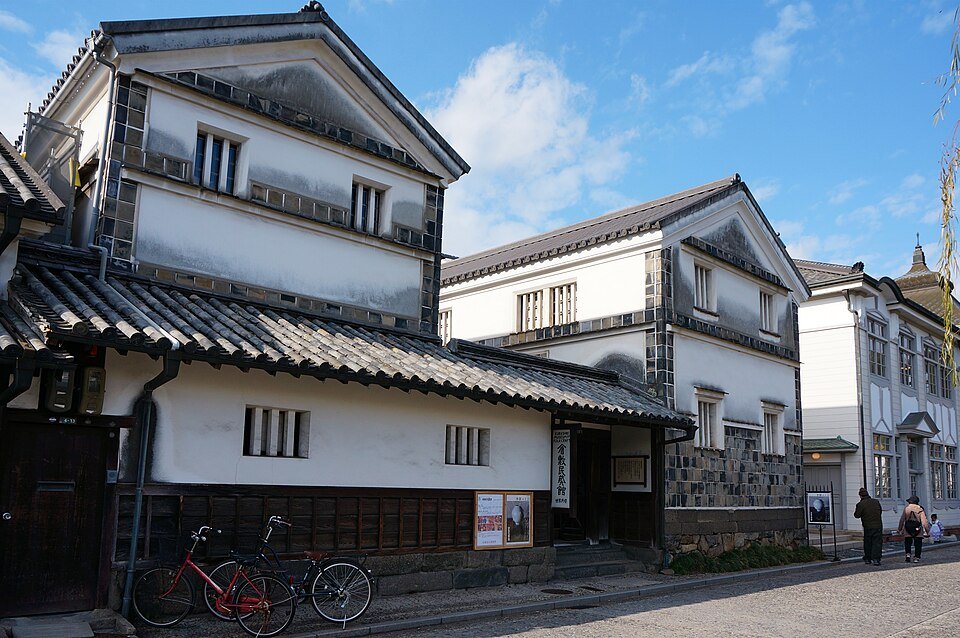
The Kurashiki Museum of Folkcraft occupies former storehouses, making the building an apt setting for objects rooted in everyday use. Ceramics, textiles, baskets and furnishings invite attention to material, proportion and the skill of their makers. This is the world of mingei: appreciation of functional things that often developed through established local traditions. A visit offers a useful contrast to the nearby fine-art museum, asking how beauty emerges in household work, repeated forms and objects made to be handled.
Plan your visitCheck the particular museum’s current opening and access.
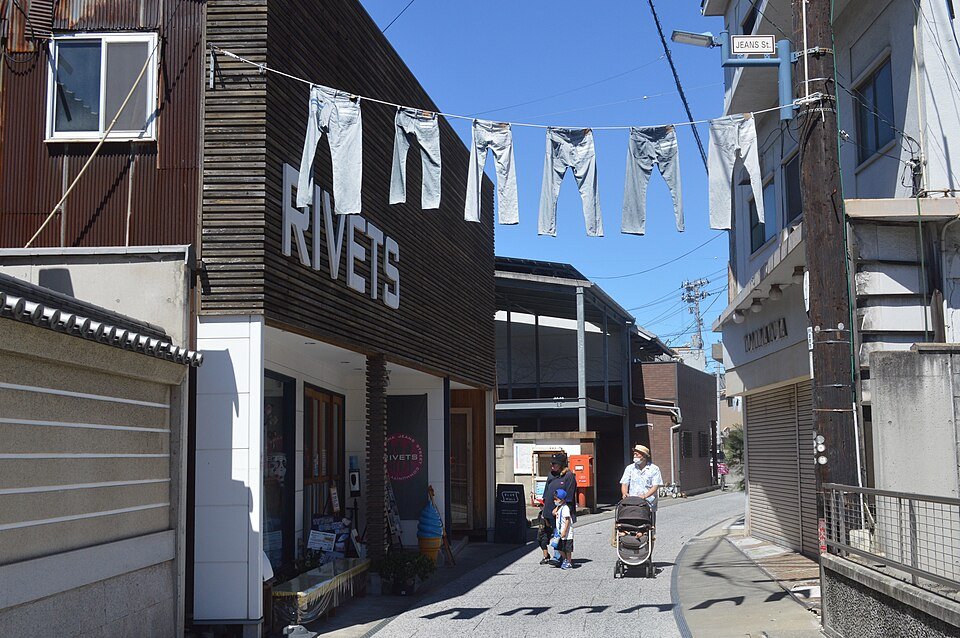
Kojima adds a working textile district to the Kurashiki story. Jeans Street brings together shops associated with local denim makers, where differences in cloth, indigo colour, construction and finishing become easier to see. The setting connects modern clothing with the area’s longer involvement in textiles. It is a separate outing from the Bikan quarter, with a more specialised focus: understanding how fabric and manufacturing give a familiar garment a local identity, rather than expecting another canal-side historic walk.
Plan your visitPlan the regional connection and check the actual shop or museum programme.
Give the canal quarter and art museum a substantial day, with room for a craft collection and lunch. Add Kojima only with another period or night. An overnight stay lets you enjoy the older streets outside the busiest excursion hours.
Choose your fixed-time visits
Check the official programme for Bikan historical quarter before fixing the rest of the day. Museum collections, guided visits and outdoor areas may follow different admission arrangements. Confirm the actual entrance, language and meeting time for anything booked.
Plan for your group
Ask the sites you choose about steps, toilets, seating and an accessible route. For a group, arrange the meeting point, vehicle drop-off and guide in advance; the best route for a quick individual visit is not always the best group route.
Make room for the place
Use the current opening days to choose the order. Give one substantial sight the morning, keep room for a sit-down lunch, and make the afternoon a choice rather than another deadline.
An unhurried introduction
A day to make your own.
Begin with Bikan historical quarter, using the current visitor arrangements.
Leave time for lunch and a comfortable transfer rather than another immediate appointment.
Choose Ohara Museum of Art or Kojima textile & jeans area for a contrasting afternoon, according to weather and energy.
Adjust this editorial starting point to current access, weather and opening days.
Enjoy the place
Leave room between the sights.
The most rewarding introduction combines Bikan historical quarter with time around Kojima textile & jeans area. Look at the streets and landscape between the stops, and leave room for an everyday café, market or neighbourhood walk instead of treating the place as a checklist.
Allow 1–2 nights if it fits your wider route; travel between regions needs time of its own.
A taste of the place
Eat & drink.
Make time for a local meal.
Look for a café or a regional Setouchi meal, comparing the actual seasonal menu rather than choosing only for a canal view. Small heritage buildings can limit seating, so arrange group and dietary requirements in advance.
A historic-quarter stay suits evening walks and the art museum. Check the specific room, meals and approach from the station; industrial-heritage surroundings and room facilities are separate questions.
Ask the property about total charges, room access, arrival with luggage, cancellation terms and any group requirements. Confirm the actual room and access route before booking.
Check the local rail connection from Okayama and the final route from Kurashiki Station. Kojima is another local journey, not a walk around the corner from the Bikan quarter. Confirm the return and luggage arrangements.
The official local resource is the place to check current exhibitions, guided walks, seasonal openings and events. Ask about language, group admission and access for the particular visit you want, rather than assuming every programme runs daily.
Official resources are linked beside the information they support. Suggested stays and routes are editorial starting points, not confirmed schedules. Property links provide direct contact, not a personal inspection or rating. Check changing details with the provider. Sources reviewed October 27, 2026.