A great garden, craft traditions and streets with distinct histories.
Kanazawa’s appeal lies in the relationships between its places: the Maeda family’s castle and garden, the teahouse streets sustained by music and performance, and a contemporary museum designed to welcome the surrounding city. These are different expressions of patronage, craftsmanship and public life. The centre rewards a route that moves between them slowly enough to notice stone walls, timber latticework and the small details of a garden path.
Kanazawa offers a rewarding stay built around gardens, architecture and the work of makers. Kenrokuen and the castle area form one chapter; the teahouse districts and contemporary art offer others. Give the city time beyond a rapid photo circuit, and check current local visitor information when planning wider Ishikawa travel.
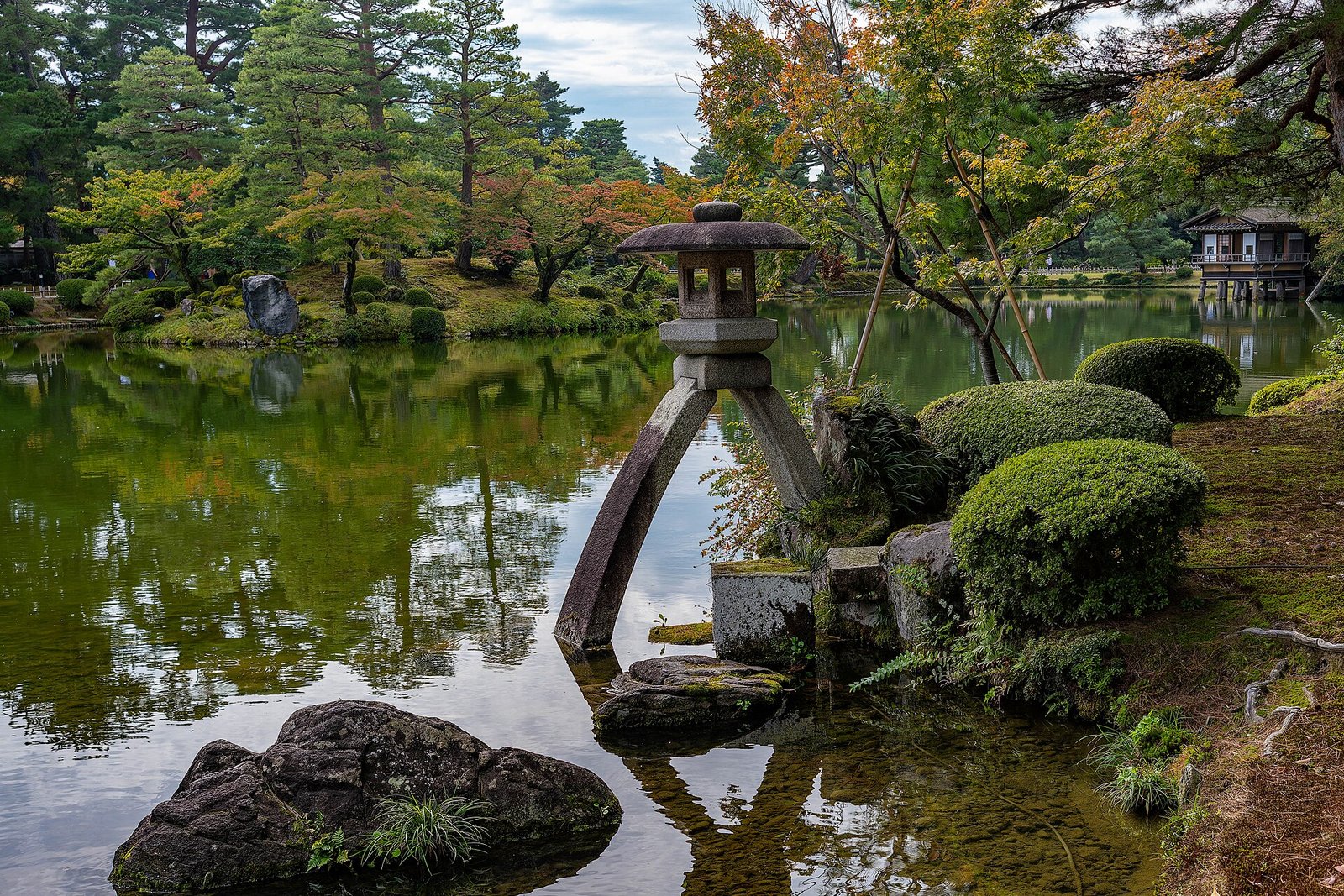
Kenrokuen grew over generations under the Maeda lords, creating a strolling garden in which ponds, bridges, stonework and carefully shaped trees form a succession of composed views. The raised ground and changing paths make the landscape feel larger than a single panorama suggests. Seasonal details alter its character, from fresh growth to the winter ropes that support branches against snow. Rather than seeking only the famous lantern, follow the water and paths to understand how the whole garden is arranged.
Plan your visitCheck current entrances, seasonal arrangements and accessible routes.
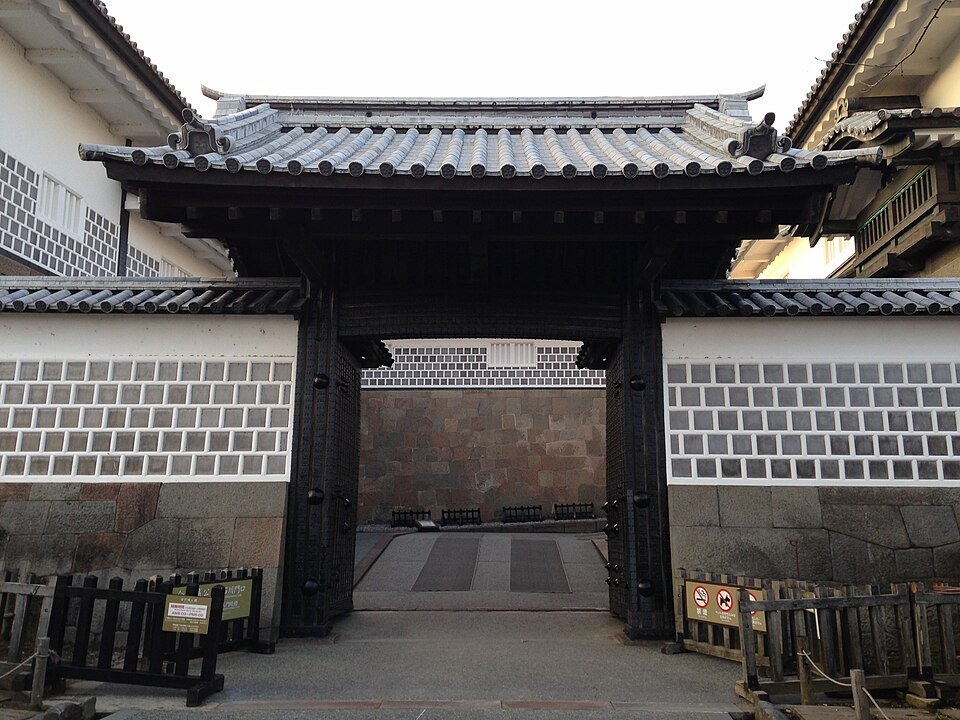
Kanazawa Castle was the headquarters of the powerful Maeda family. Its grounds combine surviving historic structures, including Ishikawa Gate, with carefully reconstructed timber buildings that explain the scale and methods of castle construction. The stone walls are especially rewarding: differences in shaping and fitting the blocks reveal successive approaches to fortification. Distinguishing original fabric from reconstruction makes the visit richer, while the open grounds help you understand the former castle’s relationship with neighbouring Kenrokuen.
Plan your visitCheck which areas have separate admission or current restrictions.
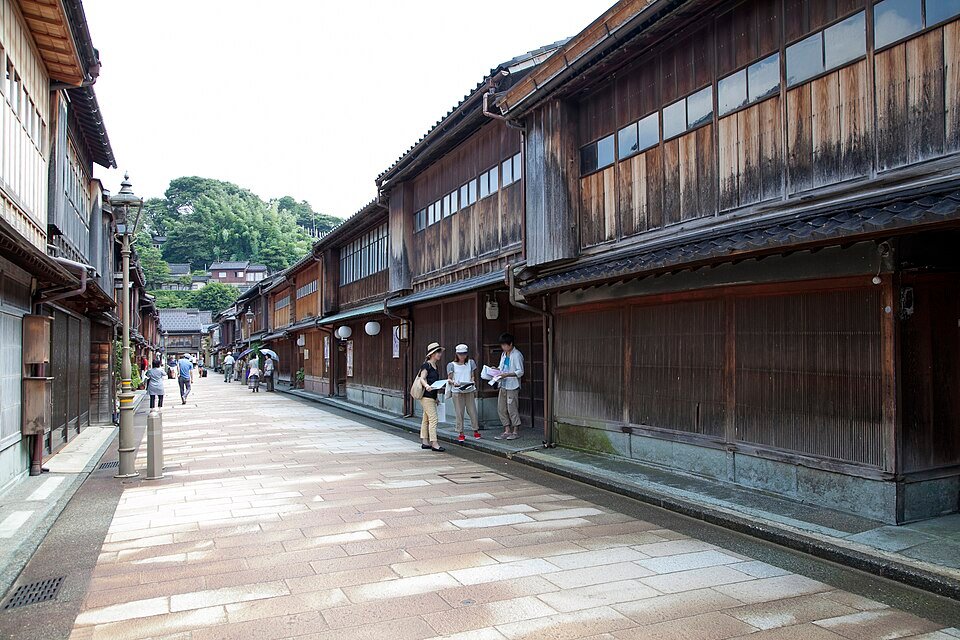
Higashi Chaya’s timber façades and fine latticework belong to a district associated with professional entertainment, music and dance. A chaya here has a more specific history than an ordinary tea shop: selected interiors help explain the rooms and social traditions behind the restrained street frontage. The area also connects with Kanazawa’s craft economy, including gold leaf. Its interest comes from this combination of architecture, performance and skilled work, rather than from treating every building as a freely accessible attraction.
Plan your visitFollow local photography and private-property rules; prearrange a cultural experience.
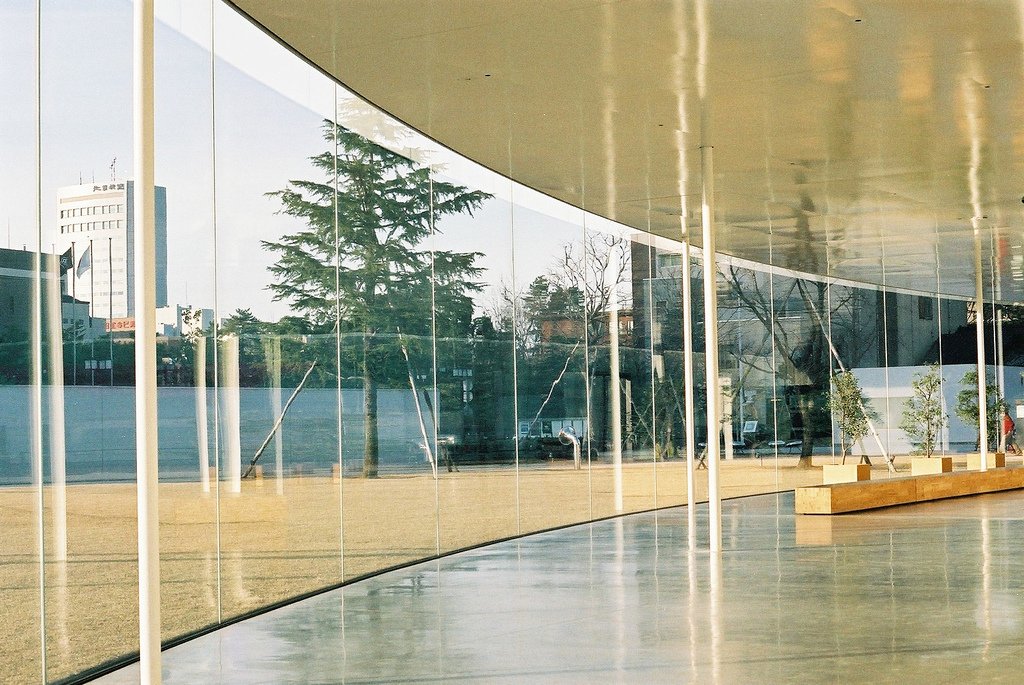
Designed by SANAA, the partnership of Kazuyo Sejima and Ryue Nishizawa, this museum has a low circular form, glass perimeter and multiple approaches. Its architecture invites movement between the surrounding city, shared spaces and exhibition rooms, replacing the idea of a single monumental front entrance with a more open civic presence. Changing exhibitions bring different approaches to contemporary art into that setting. The building and its courtyards are part of the experience, while access to individual installations depends on the current programme.
Plan your visitCheck exhibitions, timed areas and current admission arrangements.
Give the garden and castle area a substantial half-day, with another period for art or a historic district. Keep a market meal or craft visit flexible. The city’s bus circuit is a connection between places, not a reason to rush through all of them in one day.
Choose your fixed-time visits
Check the official programme for Kenrokuen before fixing the rest of the day. Museum collections, guided visits and outdoor areas may follow different admission arrangements. Confirm the actual entrance, language and meeting time for anything booked.
Plan for your group
Ask the sites you choose about steps, toilets, seating and an accessible route. For a group, arrange the meeting point, vehicle drop-off and guide in advance; the best route for a quick individual visit is not always the best group route.
Make room for the place
Use the current opening days to choose the order. Give one substantial sight the morning, keep room for a sit-down lunch, and make the afternoon a choice rather than another deadline.
An unhurried introduction
A day to make your own.
Begin with Kenrokuen, using the current visitor arrangements.
Leave time for lunch and a comfortable transfer rather than another immediate appointment.
Choose Kanazawa Castle park or 21st Century Museum of Contemporary Art for a contrasting afternoon, according to weather and energy.
Adjust this editorial starting point to current access, weather and opening days.
Enjoy the place
Leave room between the sights.
The most rewarding introduction combines Kenrokuen with time around 21st Century Museum of Contemporary Art. Look at the streets and landscape between the stops, and leave room for an everyday café, market or neighbourhood walk instead of treating the place as a checklist.
Allow 2–3 nights if it fits your wider route; travel between regions needs time of its own.
A taste of the place
Eat & drink.
Make time for a local meal.
Consider seafood at a suitable restaurant or a visit to Ōmichō Market, comparing the actual selection and prices. A craft or tea experience can add another layer; reserve specialist meals and discuss dietary needs directly.
Choose station convenience or a central cultural-district address deliberately. Compare the actual bus route, luggage approach and evening dining area rather than assuming every attraction is beside the station.
Ask the property about total charges, room access, arrival with luggage, cancellation terms and any group requirements. Confirm the actual room and access route before booking.
Check the current intercity rail route and any required transfer, then plan the local bus or walk from Kanazawa Station. The major historic districts are spread around the centre, so the final urban connection matters.
The official local resource is the place to check current exhibitions, guided walks, seasonal openings and events. Ask about language, group admission and access for the particular visit you want, rather than assuming every programme runs daily.
Official resources are linked beside the information they support. Suggested stays and routes are editorial starting points, not confirmed schedules. Property links provide direct contact, not a personal inspection or rating. Check changing details with the provider. Sources reviewed October 27, 2026.