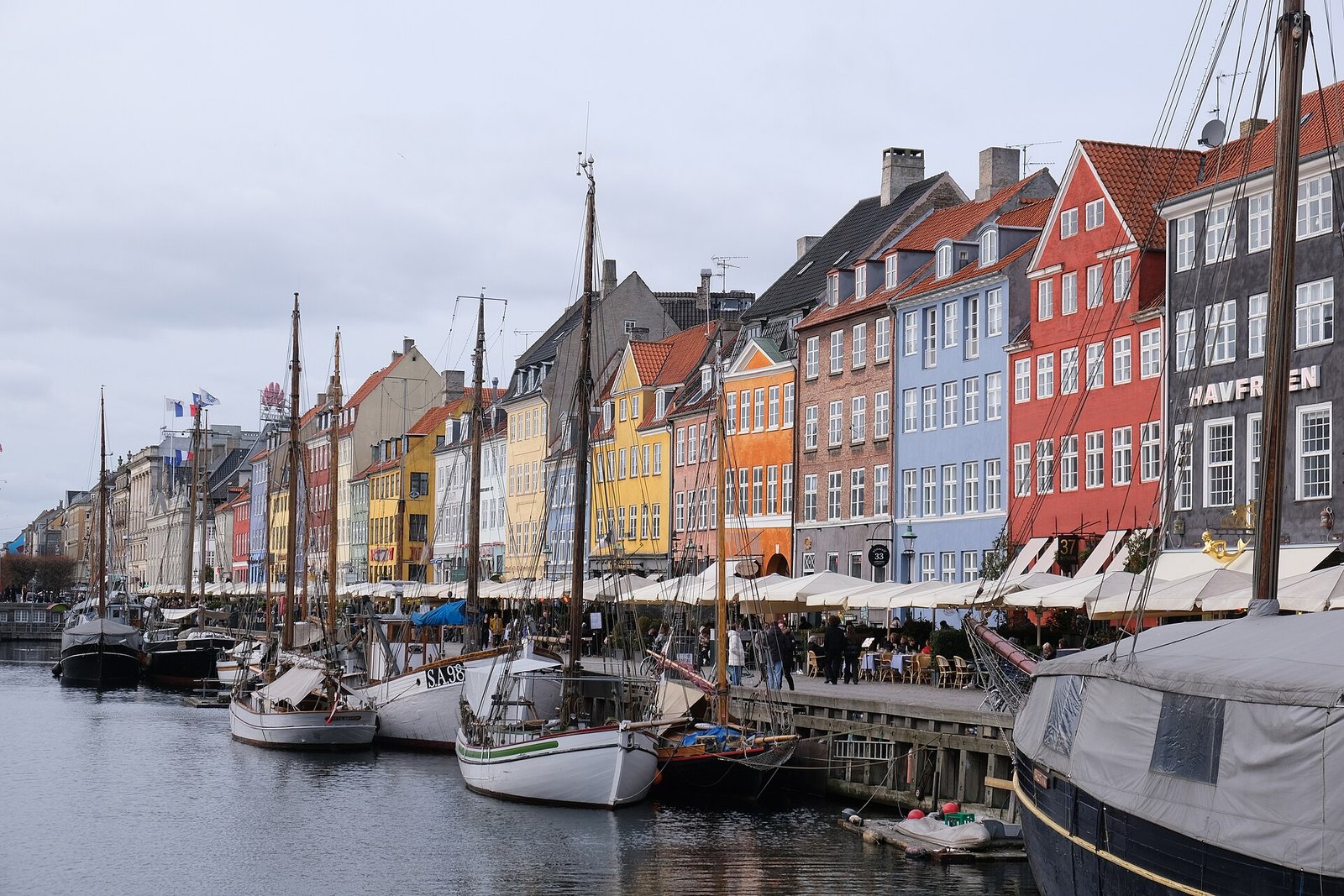
Harbour life, royal streets and Danish design at walking pace.
Copenhagen is at its best when a major museum or palace shares the day with an ordinary neighbourhood. Begin at the harbour, but look beyond the famous façades: a market meal, a design collection and a quiet street can say as much about the city as another landmark photograph.
The harbour provides Copenhagen with a natural starting point, but the city’s character also lies in the detail of interiors and everyday objects. Rosenborg places royal possessions in their architectural setting, while Designmuseum Danmark connects familiar forms with a much wider design history. Tivoli adds another layer: a historic pleasure garden that continues to change with performance, planting and seasonal events.
Nyhavn’s narrow canal gathers colourful house fronts, moored vessels and quays into one of Copenhagen’s most recognisable scenes. Look along both sides to appreciate the difference between the intimate basin and the broader harbour beyond. The buildings and boats make the water’s historic commercial role visible even within today’s busy visitor setting. Continuing beyond the canal changes the perspective from a tightly framed townscape to a larger waterfront city.
Plan your visitCheck boat access, departure point and route before booking.
Rosenborg grew from Christian IV’s early-seventeenth-century garden residence into a castle filled with royal collections. Rooms and treasures explain different forms of court display, from furniture and decorative objects to the celebrated regalia. The Knight’s Hall and its tapestries add another layer of royal self-presentation. The King’s Garden places those interiors within the original idea of a residence outside the old city, rather than an isolated treasury.
Plan your visitCheck timed admission and the separate visitor arrangements.
The museum occupies the former Royal Frederik’s Hospital, an eighteenth-century Rococo complex adapted for museum use by Ivar Bentsen and Kaare Klint. Its collections reach beyond furniture to ceramics, textiles, fashion, glass and industrial design. Only part of that wide collection is displayed at one time. Looking at material, function and manufacture makes the visit richer than recognising a few famous chairs or familiar Danish brand names.
Plan your visitCheck the current exhibition programme and admission.
Entrance to Tivoli Gardens. Photo: European Commission · Wikimedia Commons · CC BY 4.0. Cropped for display.
04
Tivoli Gardens
Opened in 1843, Tivoli remains a mixture of gardens, amusements, stages and places to eat within the city centre. Its appeal comes from the relationship between those elements: planted spaces and architecture frame rides and performances, while lighting changes the atmosphere after dark. The historic name does not mean a fixed Victorian display. Seasonal programmes continue to give the gardens different settings and rhythms through the year.
Plan your visitCheck seasonal opening dates and which experiences your ticket includes.
Book the priority museum or castle, then build a flexible walk around it. Give Tivoli an evening when it is open, and leave another day for a neighbourhood such as Christianshavn or Nørrebro. Copenhagen should not become only a string of reserved entrances.
Choose your fixed-time visits
Check the official programme for Nyhavn & the harbour before fixing the rest of the day. Museum collections, guided visits and outdoor areas may follow different admission arrangements. Confirm the actual entrance, language and meeting time for anything booked.
Plan for your group
Ask the sites you choose about steps, toilets, seating and an accessible route. For a group, arrange the meeting point, vehicle drop-off and guide in advance; the best route for a quick individual visit is not always the best group route.
Make room for the place
Use the current opening days to choose the order. Give one substantial sight the morning, keep room for a sit-down lunch, and make the afternoon a choice rather than another deadline.
An unhurried introduction
A day to make your own.
Begin with Nyhavn & the harbour, using the current visitor arrangements.
Leave time for lunch and a comfortable transfer rather than another immediate appointment.
Choose Rosenborg Castle or Tivoli Gardens for a contrasting afternoon, according to weather and energy.
Adjust this editorial starting point to current access, weather and opening days.
Enjoy the place
Leave room between the sights.
The most rewarding introduction combines Nyhavn & the harbour with time around Tivoli Gardens. Look at the streets and landscape between the stops, and leave room for an everyday café, market or neighbourhood walk instead of treating the place as a checklist.
Allow 3–4 nights if it fits your wider route; travel between regions needs time of its own.
A taste of the place
Eat & drink.
Make time for a local meal.
Try smørrebrød for a seated lunch, compare bakery pastries and leave an evening for contemporary Danish cooking if it interests you. Market halls work well for different tastes, but a group should arrange seating rather than assume a shared table will be free.
Choose the central harbour and old-city area for short first visits, or a neighbourhood address for a different evening atmosphere. Compare the actual metro connection, room access and noise levels rather than only the district name.
Ask the property about total charges, room access, arrival with luggage, cancellation terms and any group requirements. Confirm the actual room and access route before booking.
Use the airport rail or metro connection that fits your address, then plan the last walk. Copenhagen’s cycle lanes are working transport space: look carefully when crossing and keep luggage and group meeting points clear of them.
The official local resource is the place to check current exhibitions, guided walks, seasonal openings and events. Ask about language, group admission and access for the particular visit you want, rather than assuming every programme runs daily.
Official resources are linked beside the information they support. Suggested stays and routes are editorial starting points, not confirmed schedules. Property links provide direct contact, not a personal inspection or rating. Check changing details with the provider. Sources reviewed October 27, 2026.