Journey Through Time: The History of New Mexico
New Mexico, the "Land of Enchantment," holds a deeply layered history as diverse
and vibrant as its stunning landscapes, from the high desert mesas to the
snow-capped peaks of the Sangre de Cristo Mountains. The tale of New Mexico is a
rich blend of indigenous tradition, Spanish colonization, and the state's
significant role in shaping the modern United States.
The first chapters of New Mexico's history began with its indigenous
inhabitants, the Pueblo peoples, Navajo, Apache, and Ute, whose presence in the
region stretches back thousands of years. From the ancient cliff dwellings of
the Ancestral Puebloans to the vibrant cultures of the modern tribes, Native
American heritage is deeply woven into the fabric of New Mexico.
The arrival of the Spanish in the late 16th century dramatically shifted the
narrative of New Mexico. Explorer Francisco Vásquez de Coronado led an
expedition in search of the legendary Seven Cities of Gold, only to find the
thriving civilizations of the Pueblo Indians. In 1598, Juan de Oñate established
the first Spanish colony in New Mexico, bringing with him the influences of
Hispanic culture that continue to resonate today.
The Pueblo Revolt of 1680 marked a significant chapter in New Mexico's history,
when the Pueblo peoples united to drive out the Spanish colonizers. However,
Spanish control was reestablished by 1692 and lasted until 1821 when Mexico
gained independence from Spain. The Mexican period was short-lived, as the
Mexican-American War ended in 1848 with the Treaty of Guadalupe Hidalgo,
transferring the region to the United States.
With the arrival of the railroad in the late 19th century, New Mexico underwent
rapid transformation. This period brought a rush of settlers and the development
of mining and ranching industries. New Mexico achieved statehood in 1912,
becoming the 47th state to join the Union.
The 20th century brought more profound changes. During World War II, New Mexico
was the site of the top-secret Manhattan Project in Los Alamos, which developed
the world's first atomic bomb, a development that forever changed the course of
history.
In the contemporary era, New Mexico is a unique amalgamation of cultures and
influences. It's a place where Native American, Hispanic, and Anglo traditions
intersect, creating a rich cultural tapestry that's reflected in everything from
the architecture to the cuisine. The state's natural beauty, historical sites,
and thriving arts scene make it a vibrant place for residents and a popular
destination for tourists.
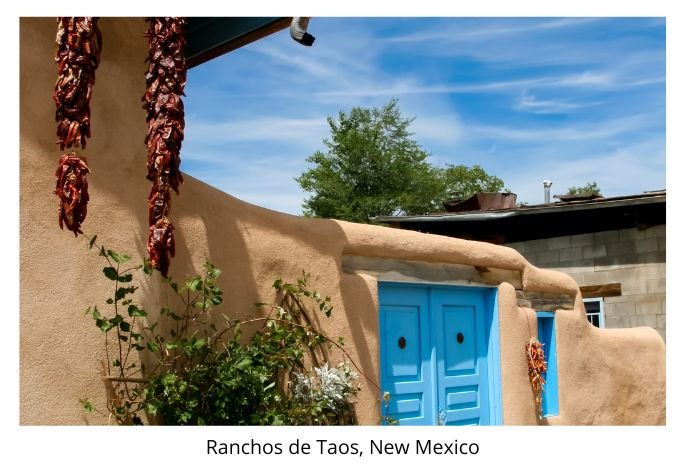
Today, New Mexico's history lives on, not only in its ancient ruins, adobe
missions, and historic sites, but also in the hearts and minds of its people.
From the sacred dances of the Pueblos to the luminous strings of chili peppers
adorning an old town plaza in Albuquerque, the echoes of the past resonate in
the rhythm of everyday life, illuminating the story of the Land of Enchantment.
Images: A red circle with lines pointing out from it, presumably a Native American representation of the sun and its rays. The same design features on the state flag. Also a stalk of grass.
Santa Fe: January high 43F, July high 85F.
Home | States/Provinces | Subjects
