Here's a brief overview of the history of British Columbia
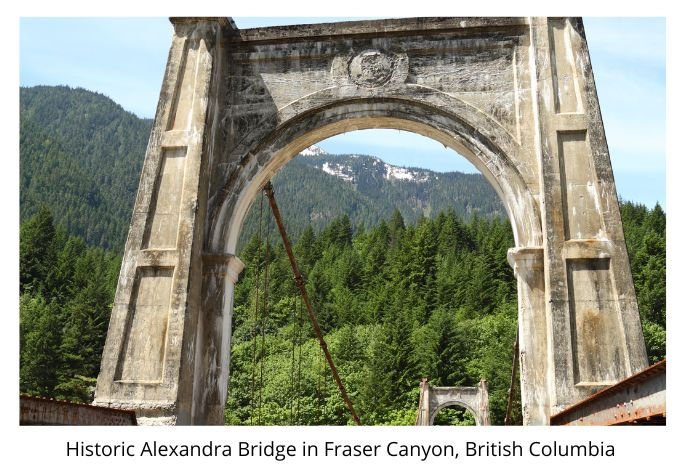
British Columbia is a province located on the westernmost part of Canada.
Indigenous Peoples:
British Columbia has a long history of Indigenous occupation, with several
distinct Indigenous nations calling the region home for thousands of years.
These include the Coast Salish, Nuu-chah-nulth, Kwakwaka'wakw, Haida, and many
others. These Indigenous peoples had well-established cultures, languages, and
trade networks.
European Exploration and Fur Trade:
The first recorded European exploration of British Columbia took place in the
late 18th century when British and Spanish explorers began to chart the coast.
British explorer Captain James Cook arrived in the area in 1778, followed by fur
traders such as Alexander Mackenzie and Simon Fraser.
The fur trade played a significant role in the region's history. The Hudson's
Bay Company established trading posts in the early 19th century, primarily
focused on the fur trade with Indigenous nations.
Colonial Period:
In the mid-19th century, British Columbia became a point of interest for
settlers and prospectors due to the discovery of gold in the Fraser River and
the Cariboo region. This led to an influx of people, including many from the
United States, during the Fraser River Gold Rush and the subsequent Cariboo Gold
Rush.
In 1858, the Crown Colony of British Columbia was established by the British
government to assert its authority over the region. The colony expanded its
borders and population, attracting settlers from various backgrounds, including
European, Chinese, and Indigenous communities.
Confederation and Provincehood:
British Columbia joined the Dominion of Canada in 1871, becoming the sixth
province of the country. The decision to join Confederation was influenced by
the promise of a transcontinental railway connecting British Columbia to the
eastern provinces and facilitating trade and transportation.
Development and Modern Era:
The completion of the Canadian Pacific Railway in 1885 further opened up British
Columbia to increased trade, immigration, and development. The province
experienced growth in industries such as forestry, mining, fishing, and
agriculture.
In the 20th century, British Columbia went through various economic and social
changes. It played a significant role in World War II, hosting military bases
and serving as a strategic location on the Pacific coast.
British Columbia has also seen significant social and cultural movements,
including Indigenous rights activism, environmental activism, and
multiculturalism.
Today, British Columbia is known for its stunning natural landscapes, including
the Rocky Mountains, Pacific coastline, and numerous national parks. It is a
diverse province with a vibrant economy, multicultural society, and a strong
Indigenous presence.
This overview provides a general understanding of the history of British
Columbia, but there are many more details and significant events that have
shaped the province over time.
Image: The provincial flag.
Text: "Beautiful British Columbia".
A small shield appears at top centre with a Union Jack and the sun.
As well as the road number, the initials "B.C." also appear.
Vancouver: Jan/Feb high 6C, Mar/Apr high 10C, May/Jun high 16C, Jul/Aug high 22C, Sep/Oct high 15C, Nov/Dec high 4C.
